
Navigating the landscape of weight management and metabolic research in Canada can feel complex, especially with the rise of various compounds and platforms. On one side, we have Health Canada-approved GLP-1 receptor agonists and co-agonists, accessed through regulated medical pathways. On the other, high-purity research-grade peptides are available for scientific inquiry. This guide cuts through the confusion, comparing these distinct categories to help you understand the differences, legal boundaries, and appropriate uses. We’ll examine clinical telehealth services like Felix Health and Jill Health, which offer legitimate access to prescription GLP-1s, alongside suppliers like Boss Peptides, which provide rigorously tested compounds strictly for laboratory research.
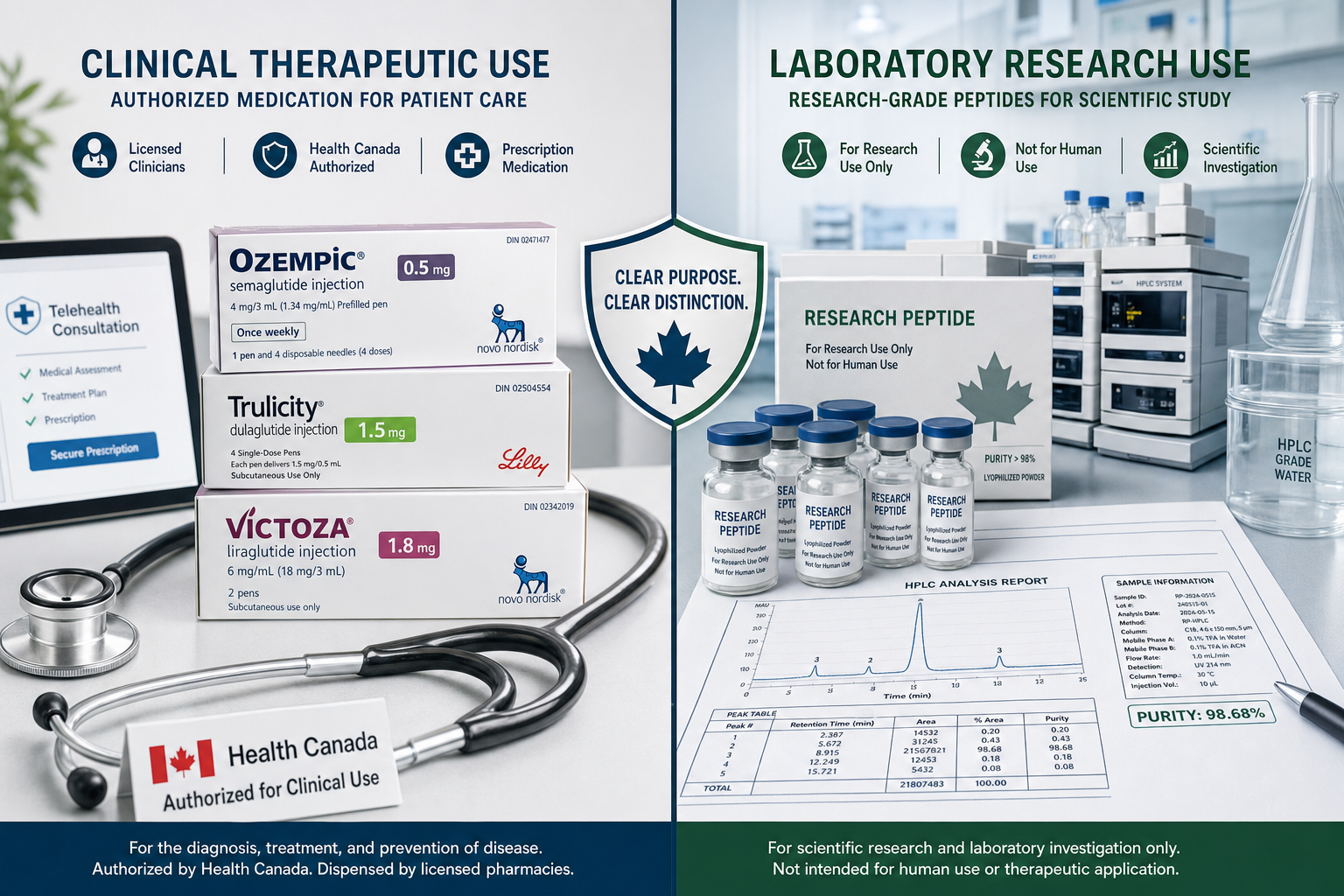
Whether you’re a Canadian seeking medically supervised weight management or a researcher requiring precise, lab-tested compounds, understanding these distinctions is crucial for safety and compliance. By 2026, the options are clearer, but the need for accurate information is greater than ever.
Approved GLP-1 Alternatives in Canada: The 2026 Clinical Landscape
For Canadians seeking therapeutic solutions for chronic weight management or type 2 diabetes, the pathway to obtaining GLP-1 receptor agonists and GLP-1/GIP co-agonists is strictly regulated and medically supervised. As of 2026, several Health Canada approved GLP-1 options are available, though specific product availability can fluctuate. These medications, such as Ozempic (semaglutide), Wegovy (semaglutide, specifically for weight management), and Mounjaro (tirzepatide, a GLP-1/GIP co-agonist), represent the forefront of pharmacological treatment for these conditions.
These prescription medications function by mimicking natural hormones that regulate appetite, blood sugar, and gastric emptying, leading to significant improvements in metabolic health and sustained weight loss when used under medical guidance. When people ask, “What is the Canadian alternative to Ozempic?” they are often referring to other Health Canada approved GLP-1 alternatives Canada offers, such as Wegovy or Mounjaro, which share similar mechanisms but may have different indications, dosages, or availability. It’s important to remember that these are not over-the-counter solutions; they require a doctor’s assessment and prescription.
Access to these treatments often begins with a consultation with a licensed Canadian medical practitioner, who assesses your medical history, current health status, and suitability for the medication. This clinical oversight is paramount to ensure safety, monitor for potential side effects, and optimize treatment outcomes. The medications are dispensed through licensed pharmacies, ensuring product integrity and appropriate patient counseling. For those with cardiovascular disease, identifying “Which GLP-1 is approved for CAD?” is a critical question, and licensed medical professionals are the only ones qualified to provide this specific guidance based on individual patient needs and the most current Health Canada approvals. For a deeper dive into the chemical and scientific context of these compounds, including newer dual/triple agonists, you can read more about Retatrutide vs. Wegovy vs. Zepbound (2026).
The Telehealth Pathway: How Felix Health and Jill Health Facilitate Clinical Access
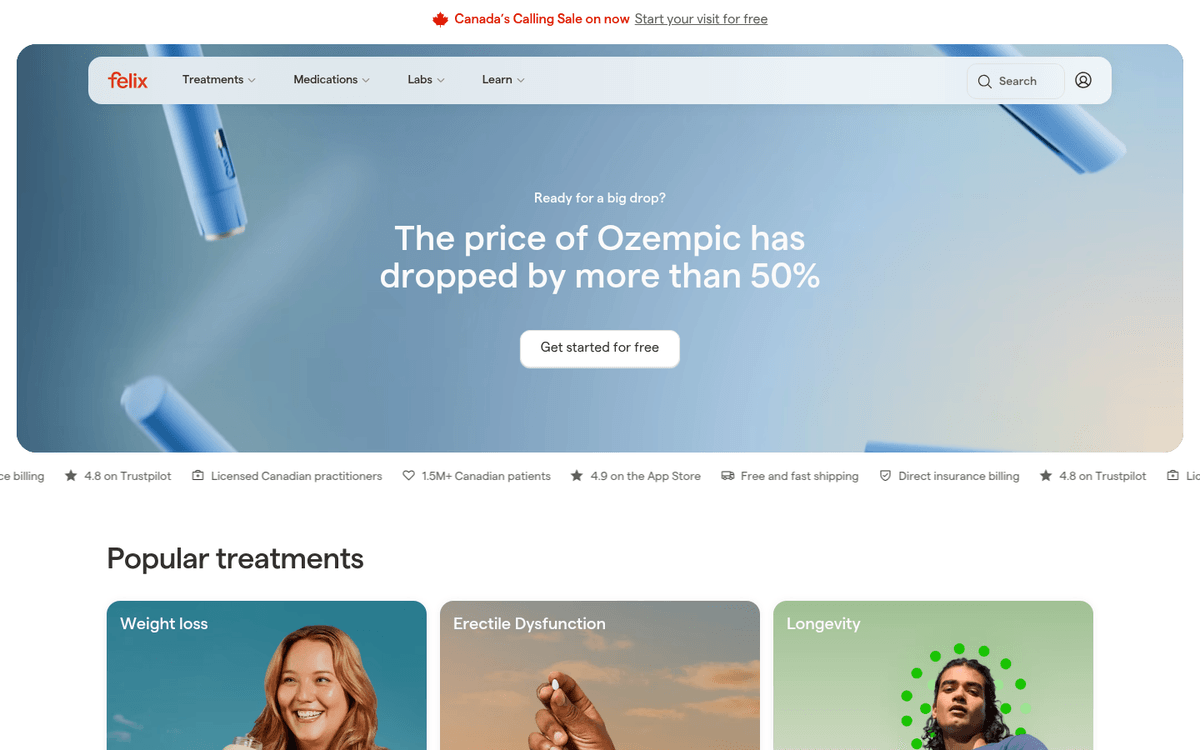
In Canada, digital health platforms like Felix Health and Jill Health have streamlined access to legitimate, prescription-based weight management treatments, including Health Canada approved GLP-1 medications. These services represent the primary, legally sanctioned route for Canadians seeking clinical therapeutic options for weight loss. They operate by connecting patients with licensed Canadian doctors and nurse practitioners through virtual consultations, removing many of the traditional barriers to care.
The process typically begins with an online medical questionnaire, followed by a secure video or text-based consultation. During this consultation, a healthcare professional assesses your medical history, discusses your health goals, and determines if a prescription GLP-1 is appropriate for you. This rigorous assessment ensures that treatment plans are personalized and adhere to established medical guidelines. For example, Felix Health emphasizes a comprehensive approach, where your healthcare provider monitors your progress and adjusts your treatment as needed, providing ongoing support in your weight management journey. This model of telehealth weight loss Canada relies on is designed for convenience without compromising clinical safety or efficacy.
Jill Health, specifically tailored with a women-focused approach, offers a similar clinical pathway. They understand the unique health considerations women face and provide a supportive environment for discussions around weight loss and metabolic health. Both platforms ensure that any prescribed medication is fulfilled by licensed Canadian pharmacies and shipped directly to your door, maintaining a secure and regulated supply chain. This transparent and supervised process stands in stark contrast to informal online marketplaces, providing patients with peace of mind regarding the authenticity and safety of their medication.
Research-Grade Peptides: Sourcing for Laboratory and Analytical Study
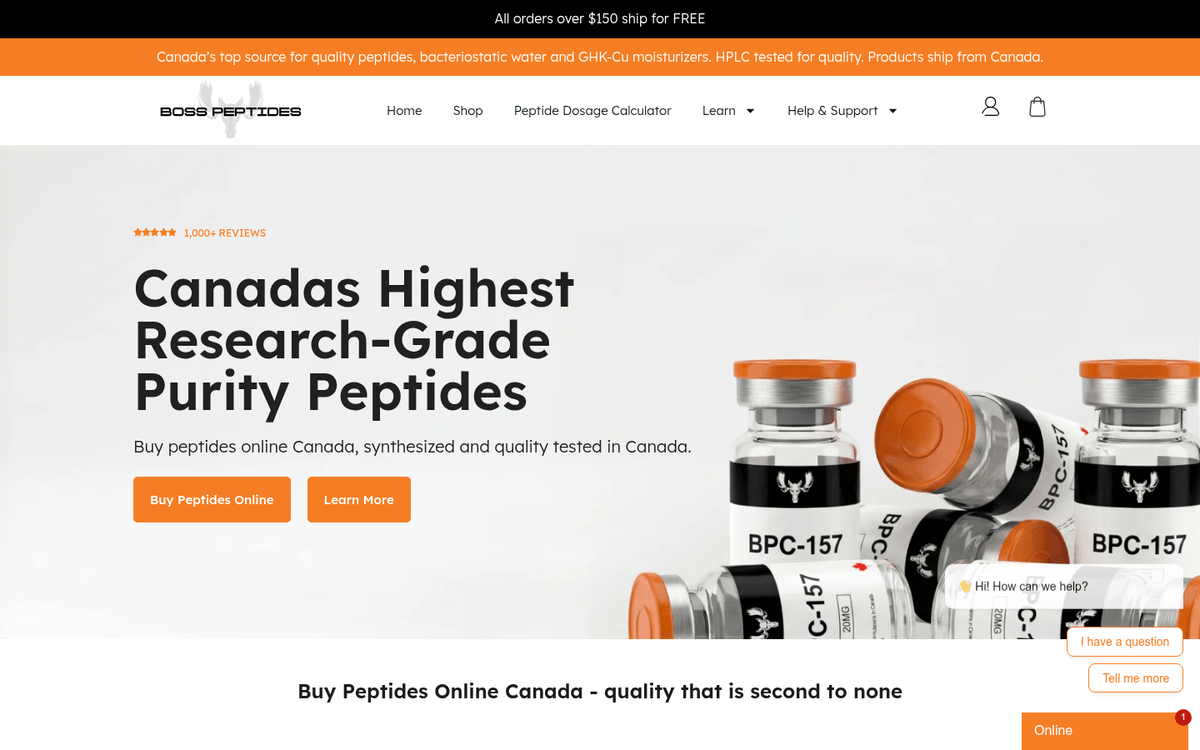
On the other side of the spectrum, Boss Peptides operates within the realm of scientific research, providing high-purity, research-grade peptides. It’s absolutely crucial to state upfront: **these research peptides are strictly for laboratory and in vitro (test tube) evaluation, or for scientific in vivo research. They are explicitly NOT for human consumption, therapeutic use, or any form of clinical application.** This distinction is not merely a formality; it’s a legal and ethical imperative that defines the entire operation of Boss Peptides and similar suppliers.
Boss Peptides specializes in synthesizing and rigorously quality-testing compounds in Canada, ensuring over 99% purity for analytical and experimental purposes. When you buy peptides online Canada for research, the expectation is absolute precision in chemical composition. This commitment is reflected in their transparency, providing comprehensive documentation like HPLC (High-Performance Liquid Chromatography) and Mass Spectrometry purity testing for every batch. This level of purity verification, often exceeding pharmaceutical standards for raw materials, is essential for accurate scientific results, as even minor contaminants can skew experimental outcomes.
The role of research peptides Canada offers, like those from Boss Peptides, is to facilitate scientific discovery. Researchers use these compounds to study biological pathways, develop new diagnostic tools, or explore potential drug candidates in controlled laboratory settings. For example, a lab might use a research peptide to understand cellular signaling, investigate enzyme kinetics, or test the efficacy of a compound in preclinical models. They are not intended as `approved GLP-1 alternatives Canada` for human use, nor should they be confused with prescription medications obtained via telehealth platforms. Researchers looking for specific compounds to study metabolic and lipolytic pathways can consult our guide on Top Peptides for Fat Loss, and learn how to use fat loss peptides safely in a laboratory setting.
Head-to-Head: Clinical Prescription GLP-1s vs. Research-Grade Peptides
To truly understand the difference between therapeutic GLP-1s and research-grade peptides, we need to compare them directly across key dimensions. This isn’t a matter of one being ‘better’ than the other, but rather understanding their distinct purposes, regulatory frameworks, and safety implications. Confusing these two categories can lead to serious health and legal risks.
| Feature | Clinical Prescription GLP-1s (Felix Health, Jill Health) | Research-Grade Peptides (Boss Peptides) |
|---|---|---|
| Regulatory Approval | Health Canada approved for human therapeutic use (e.g., weight management, type 2 diabetes). Legally prescribed and dispensed. | Not approved by Health Canada for human use. Strictly for laboratory, in vitro, and scientific in vivo research purposes. |
| Sourcing & Clinical Supervision | Requires licensed Canadian medical practitioner oversight, telehealth consultations, and fulfillment by licensed Canadian pharmacies. | Directly sourced from specialized chemical synthesis laboratories. No medical oversight is involved or permitted for human use. |
| Intended Application | Clinical human treatment for chronic weight management, type 2 diabetes, and related metabolic conditions. | Laboratory testing, in vitro assays, scientific in vivo research on animals or cells to study biological mechanisms. |
| Purity Verification | Batch-released pharmaceuticals with stringent manufacturing and quality control, as per Health Canada regulations for human drugs. | Independent, third-party HPLC verified peptides and Mass Spectrometry purity testing (typically >99%) for analytical accuracy in research. |
| Cost & Access | Variable cost; may be covered by private insurance or provincial plans. Requires prescription. | Direct purchase for research institutions and qualified individual researchers. Not covered by health insurance for human use. |
| Safety Boundaries | Clinically studied for efficacy and safety in humans, with known side effects, contraindications, and dosing guidelines. | Safety data is for laboratory handling. No established human safety profile for direct consumption. Potential for unknown risks if misused. |
This comparison clearly delineates the distinct worlds of `research peptides vs prescription` medications. While prescription GLP-1s are designed, tested, and approved for human health interventions, research peptides are tools for scientific inquiry. The idea of an “over-the-counter alternative to GLP-1” for human consumption is a misconception that this table aims to clarify – there isn’t one that’s medically or legally sanctioned.
Deciding the Path: Clinical Weight Loss vs. Scientific Lab Research
The choice between seeking prescription GLP-1s and sourcing research-grade peptides boils down to one fundamental question: what is your objective? There is no overlap in their appropriate application. This is not a matter of preference or finding a ‘loophole’; it is about adhering to established medical, legal, and scientific standards.
For individuals seeking weight loss or management of type 2 diabetes: Your path must be exclusively through a licensed Canadian medical practitioner. This means engaging with telehealth services like Felix Health or Jill Health, or consulting your family doctor. These are the only legitimate avenues to access `Health Canada approved GLP-1` therapeutic options. Attempting to use research-grade peptides for human consumption is both illegal and extremely dangerous. You would be bypassing crucial medical supervision, risking unknown side effects, incorrect dosing, and exposure to substances not deemed safe for human intake by regulatory bodies.
For scientific researchers and analytical laboratories: Your requirement is for high-purity, accurately characterized compounds for experimental purposes. Suppliers like Boss Peptides provide the verified `lab tested peptides` necessary for rigorous scientific study. When working with `research peptides Canada` provides, it’s about ensuring the integrity of your experimental results through pure and well-documented compounds. The strict adherence to “for research use only” on these products is paramount for maintaining ethical research practices and ensuring laboratory safety.
Ultimately, the decision isn’t about which product is ‘better,’ but which pathway aligns with your specific, legally permissible goal. Clinical patients must commit to the medically supervised route, while certified scientific labs require precise, `high purity peptides` for their analytical and experimental work. This conditional verdict underscores the importance of respecting these clear boundaries for both health and legal compliance.
Frequently Asked Questions About GLP-1 Access in Canada
Is there an over-the-counter alternative to GLP-1?
No, there are currently no Health Canada-approved over-the-counter alternatives to GLP-1 medications for therapeutic use in weight management or type 2 diabetes. All effective GLP-1 receptor agonists and GLP-1/GIP co-agonists are prescription-only medications due to their potent effects and the need for medical supervision to ensure safety and appropriate dosing. Any product marketed as an “over-the-counter GLP-1 alternative” for human consumption should be approached with extreme caution, as it is likely unregulated and potentially unsafe.
What is the Canadian alternative to Ozempic?
In Canada, approved alternatives to Ozempic (semaglutide) primarily include other Health Canada-approved GLP-1 receptor agonists or GLP-1/GIP co-agonists like Wegovy (semaglutide, specifically indicated for weight management) and Mounjaro (tirzepatide). These medications work similarly but may differ in their specific indications, dosages, and availability. Your doctor will determine the most suitable `approved GLP-1 alternatives Canada` offers based on your health profile and treatment goals. Consulting with telehealth providers like Felix Health or Jill Health can help assess these options.
What is the cheapest GLP-1 in Canada without insurance?
The cost of GLP-1 medications without insurance can vary significantly depending on the specific drug, dosage, pharmacy, and any available patient assistance programs. Generally, these medications are expensive. There isn’t a universally “cheapest” option, as prices are subject to change and individual pharmacy pricing. Canadians without insurance are encouraged to discuss costs and potential financial aid with their prescribing doctor or pharmacist. It’s critical to avoid unregulated online sources that promise cheaper `research peptides vs prescription` options, as these carry substantial health risks and are illegal for human use.
Which GLP-1 is approved for CAD?
Some GLP-1 receptor agonists have demonstrated cardiovascular benefits in clinical trials, leading to specific approvals or indications for reducing the risk of major adverse cardiovascular events in patients with type 2 diabetes and established cardiovascular disease. As of 2026, medications like Ozempic (semaglutide) have data supporting their use in this context. However, the specific GLP-1 approved for cardiovascular disease (CAD) risk reduction in Canada, and for which patients, is a decision made by a licensed healthcare provider based on the latest Health Canada guidelines and the patient’s individual medical history. You should consult with your doctor to determine the most appropriate treatment.