

Canadian Researcher Guide · 2026
Peptides for Bodybuilding: Do They Work, and Are They Safe?
Peptides have become one of the most discussed topics in bodybuilding circles — but separating real science from hype is harder than it should be. Supplement companies make bold claims, community forums fill in the gaps with anecdote, and the research tells a more complicated, more honest story. This guide covers what peptides actually do, which ones are relevant for bodybuilding, and what the evidence genuinely supports.
What Are Peptides and What Do They Do?
Peptides are short chains of amino acids — the same building blocks that make up proteins, just in smaller, more targeted sequences. Your body produces thousands of them naturally. Each one acts as a signalling molecule, carrying specific instructions to cells and tissues throughout the body.
What makes certain peptides interesting for bodybuilding is their ability to interact with hormone receptors. Some peptides have structures similar to naturally occurring hormones, which allows them to activate the same receptors and trigger the same downstream effects — but in a more targeted, controlled way than the hormones themselves. They can also penetrate tissues more readily than larger proteins, which affects how quickly and precisely they act.
The peptides most relevant to bodybuilding fall into the Growth Hormone Secretagogue (GHS) category. These are compounds that stimulate the pituitary gland to produce and release human growth hormone (HGH). HGH in turn signals the liver to produce IGF-1, which drives muscle protein synthesis, promotes fat breakdown, supports bone density, and speeds up tissue repair. This GH → IGF-1 → muscle and fat effects chain is why GHS peptides attract so much attention from people trying to change body composition.
How GHS Peptides Work for Bodybuilding
The pituitary gland releases HGH in pulses throughout the day, with the largest pulse occurring during deep sleep. GHS peptides amplify this release through two complementary receptor pathways:
The GHRH receptor pathway is activated by GHRH analogs like CJC-1295 (Mod GRF 1-29), Sermorelin, and Tesamorelin. These peptides mimic Growth Hormone-Releasing Hormone — the hypothalamic signal that tells the pituitary to produce and prepare GH for release. They increase both the amount of GH produced and the amplitude of each natural pulse.
The ghrelin receptor (GHS-R1a) pathway is activated by GHRPs like GHRP-2, GHRP-6, and Ipamorelin. These peptides mimic ghrelin — the signal that triggers the actual release of stored GH from the pituitary. They work through a completely separate receptor from GHRH, which is why combining a GHRH analog with a GHRP produces a synergistic GH pulse larger than either compound alone.
The downstream effects that matter for bodybuilding run through IGF-1: increased muscle protein synthesis, activation of satellite cells (muscle stem cells) for repair and growth, enhanced lipolysis in fat tissue, improved collagen synthesis in connective tissue, and better recovery from training-induced damage.
One important caveat from the research: while GHS peptides clearly raise GH and IGF-1 levels in humans, no studies to date have examined their effects specifically in well-trained individuals. Most body composition data comes from GH-deficient patients or older adults with low baseline GH — populations where the effect is more pronounced because there’s more room for improvement. The effect size in healthy, well-trained athletes may be more modest.
The Peptides Used for Bodybuilding
The GHS class breaks into three subcategories, each working through a slightly different mechanism. Here’s how they map to the products we carry.
GHRH Analog
Mod GRF 1-29 (CJC-1295 No DAC)
Mechanism: GHRH receptor activation · Goal: GH pulse amplification, lean mass, fat loss
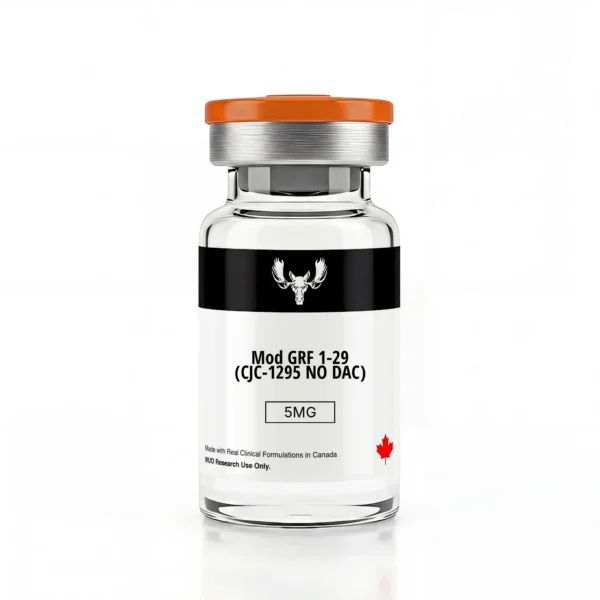
Mod GRF 1-29 — also called CJC-1295 without DAC — is a stabilized analog of the first 29 amino acids of GHRH. Four strategic amino acid substitutions make it resistant to enzymatic breakdown, extending its half-life from the 2–3 minutes of native GHRH to approximately 30 minutes. This is long enough to produce a meaningful GH pulse while still preserving the natural pulsatile rhythm of GH release.
The Teichman et al. (2006) human trial in the Journal of Clinical Endocrinology & Metabolism found that a single injection of a long-acting GHRH analog raised GH by 2–10 fold and IGF-1 by 1.5–3 fold in healthy adults aged 21–61, with no serious adverse reactions. A follow-up proteomic study (Sackmann-Sala et al., 2009) confirmed those IGF-1 increases correlated directly with decreases in fat mass and increases in lean mass. A 4-month research protocol using a Mod GRF analog found subjects gained an average of 1.26 kg of lean body mass, with improvements in skin thickness and insulin sensitivity.
For bodybuilding research, Mod GRF 1-29 is most commonly injected alongside a GHRP — hitting both receptor pathways simultaneously for a synergistic GH pulse that neither compound can produce alone. Our Mod GRF 1-29 / CJC-1295 No DAC (5mg) is the standalone compound for researchers building custom stacks.
Shop Mod GRF 1-29 →GHRP — Second Generation
GHRP-2
Mechanism: Ghrelin receptor activation · Goal: Strong GH pulse, muscle growth, fat loss
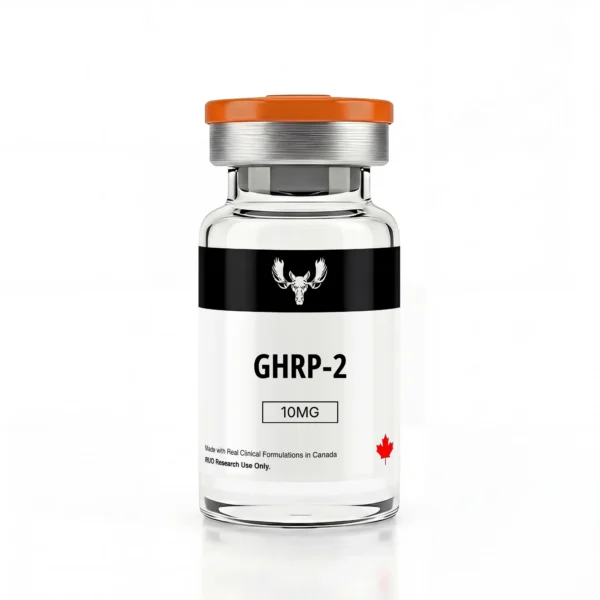
GHRP-2 (also known as Pralmorelin) is a second-generation Growth Hormone-Releasing Peptide that activates the ghrelin receptor on pituitary somatotrophs, triggering a potent GH pulse. It’s one of the most studied GHRPs in the clinical literature — it has been through human trials and was approved in Japan as a diagnostic agent for GH deficiency testing.
Compared to the first-generation GHRP-6, GHRP-2 produces a stronger and cleaner GH pulse. It raises cortisol and prolactin less than GHRP-6, though it still produces some elevation of both — more than the newer, more selective Ipamorelin. For bodybuilding researchers, this means GHRP-2 sits in the middle of the GHRP spectrum: more potent than Ipamorelin for raw GH output, but with a slightly broader hormonal footprint.
Human studies with GHRP-2 have confirmed significant GH release across a range of doses, with dose-dependent effects on IGF-1. Research published in the Journal of Clinical Endocrinology & Metabolism found GHRP-2 produced consistent GH responses in both GH-deficient and normal subjects, supporting its use as a diagnostic tool — and providing meaningful human pharmacodynamic data that most research peptides lack.
GHRP-2 pairs synergistically with GHRH analogs like Mod GRF 1-29. Our GHRP-2 (10mg) standalone is available for researchers studying the ghrelin receptor pathway independently or building custom stacks.
Shop GHRP-2 →GHRP — First Generation
GHRP-6
Mechanism: Ghrelin receptor activation · Goal: Strong GH pulse, appetite stimulation, bulking protocols
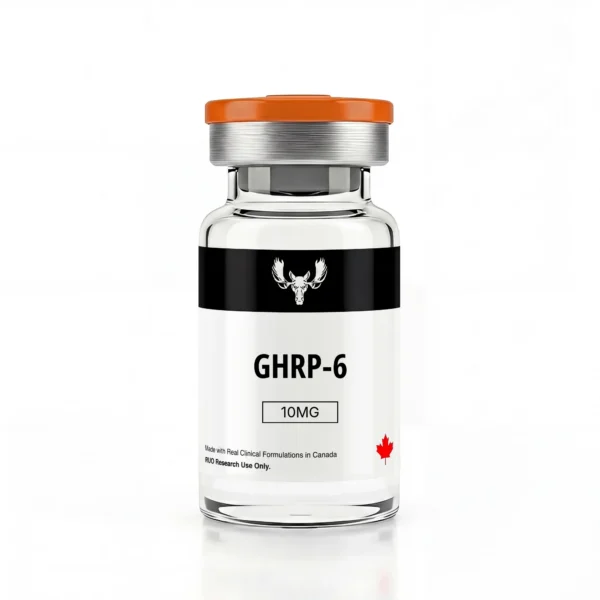
GHRP-6 is one of the original synthetic GHRPs and remains among the most studied compounds in this class. It activates the GHS-R1a ghrelin receptor on pituitary somatotrophs, producing a strong GH pulse — and it also activates ghrelin receptors in the hypothalamus, which triggers a pronounced appetite stimulation effect. For bodybuilders in a caloric surplus or bulking phase, this side effect can actually be useful; for those cutting, it’s a significant drawback.
On the hormonal side, GHRP-6 raises cortisol and prolactin more than GHRP-2 or Ipamorelin. The cortisol elevation is mild and transient, but it’s a real variable in research protocols where hormonal confounders matter. Despite this, GHRP-6’s GH-releasing potency is well-established across decades of preclinical and clinical research, and it remains popular in bodybuilding research precisely because its effects are strong and well-characterized.
GHRP-6’s appetite-stimulating mechanism runs through the same ghrelin receptor pathway as its GH-releasing effect — ghrelin receptors in the hypothalamus directly stimulate hunger centers. This makes GHRP-6 the preferred GHRP for mass-gain protocols where increased caloric intake is the goal, and a less ideal choice for recomposition or fat-loss focused research. Our GHRP-6 (10mg) is available for standalone ghrelin receptor research.
Shop GHRP-6 →Pre-Blended Stack
CJC-1295 & GHRP-2 Blend (10mg)
Mechanism: Dual-pathway GHRH + GHRP · Goal: Maximum synergistic GH pulse, body recomposition
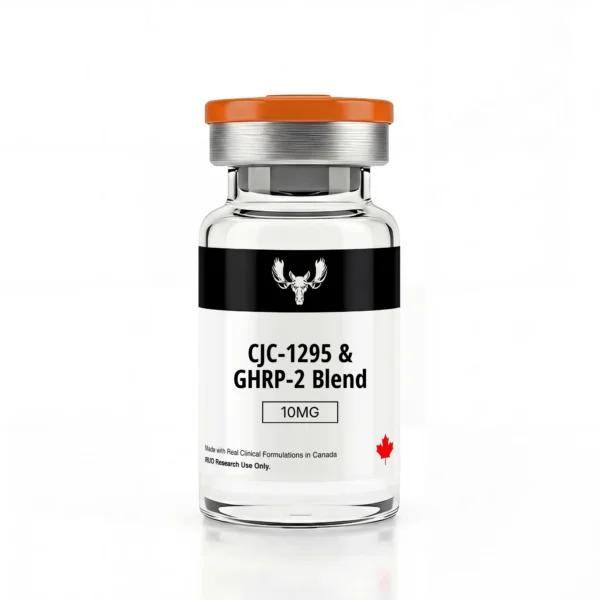
The CJC-1295 & GHRP-2 Blend (10mg) combines Mod GRF 1-29 (CJC-1295 without DAC) and GHRP-2 in a single pre-blended vial — the most popular GHRH + GHRP combination in GH secretagogue research. The rationale is fundamental: GHRH analogs and GHRPs activate completely separate receptor systems. Mod GRF 1-29 primes the GHRH receptor and drives GH synthesis. GHRP-2 hits the ghrelin receptor to trigger the release of that stored GH. When injected simultaneously, the two signals converge on pituitary somatotrophs and produce a GH pulse substantially larger than either compound alone.
Research confirms this synergy is real, not additive. A study examining GHRH + GHRP combinations found that co-administration produced GH responses exceeding the sum of individual doses — a genuine pharmacodynamic synergy driven by the two distinct receptor systems amplifying each other’s downstream cAMP signalling cascades. For bodybuilding researchers, this makes the GHRH + GHRP stack the most efficient way to maximize GH pulse amplitude using physiological compounds rather than exogenous HGH.
GHRP-2 is the GHRP of choice in this blend for researchers who want strong GH output without the pronounced hunger stimulation of GHRP-6. The blend comes as a single lyophilized powder, tested to >99% purity by HPLC and mass spectrometry, and manufactured in Canada. Use our Peptide Dosage Calculator for reconstitution volumes.
Shop CJC-1295 & GHRP-2 Blend →What the Research Actually Supports
The honest picture of the evidence is more nuanced than bodybuilding forums suggest. Here’s where the science is solid, where it’s promising but incomplete, and where it’s genuinely unclear.
Well-supported
GHS peptides clearly raise GH and IGF-1 levels in humans — this has been demonstrated in multiple controlled human trials. The Teichman et al. (2006) GHRH analog trial showed 2–10 fold GH increases and 1.5–3 fold IGF-1 increases in healthy adults. GHRP-2 and GHRP-6 have human pharmacodynamic data confirming dose-dependent GH release. These are not contested findings.
The downstream proteomic analysis by Sackmann-Sala et al. (2009) found that GH/IGF-1 elevation from GHRH analog treatment correlated with measurable changes in serum protein profiles associated with decreased fat mass and increased lean mass — a direct signal that the hormonal changes are translating to body composition effects at the molecular level.
Promising but incomplete
Body composition changes in healthy, trained individuals specifically have not been studied. The lean mass and fat loss data comes from GH-deficient patients and older adults with age-related GH decline. Research suggesting 8–12 weeks of peptide use alongside resistance training can improve muscle strength and mass exists, but sample sizes are small and study designs vary significantly. The effect in already-optimized athletes is genuinely unknown.
Unclear
Long-term safety data beyond 24 months of continuous use doesn’t exist. The optimal dosing, cycling protocols, and combinations for specific bodybuilding goals haven’t been studied in controlled trials. Most of the dosing information circulating in the bodybuilding community is based on community experience, not published research.
Side Effects and Safety Considerations
The safety profile of GHS peptides is better characterized than many people realize, largely because several of them have passed through clinical trials. A 2017 review by Sigalos and Pastuszak in Sexual Medicine Reviews summarized the available safety data and identified the most common side effects of GHS use:
How to Source Peptides in Canada
For researchers in Canada, quality control is the most important variable. The peptide market has vendors at every level of quality, and there’s no regulatory body verifying what’s actually in a vial unless the supplier tests it independently. Here’s the minimum standard:
- 1 HPLC purity ≥98% — High-performance liquid chromatography confirms the peptide content and removes synthesis byproducts. Anything below 98% is substandard for research use.
- 2 Mass spectrometry identity confirmation — Verifies that what’s in the vial matches the theoretical molecular weight of the stated compound. Without this, you can’t confirm you have the right peptide.
- 3 Sterility testing — For any injectable compound, contamination is the primary practical safety risk. Sterility certification from an independent lab is non-negotiable.
- 4 Third-party COA, not internal testing — Suppliers testing their own products is a conflict of interest. The certificate of analysis should come from an independent Canadian lab.
- 5 Canadian-manufactured and shipped — Domestic manufacturing means the product doesn’t spend weeks in customs or in temperature-uncontrolled shipping. Peptides degrade with heat and improper storage.
All Boss Peptides products are manufactured and shipped from Canada, tested to >99% purity by HPLC and mass spectrometry, with COAs available on every product page. Use our Peptide Dosage Calculator for reconstitution and injection unit calculations.
Frequently Asked Questions
Are peptides the same as steroids?
No. Anabolic steroids are synthetic androgens that mimic testosterone, act on androgen receptors throughout the body, and suppress natural testosterone production — often permanently with long-term use. GHS peptides work through the GH axis, stimulating the pituitary to produce its own GH within the body’s existing feedback system. They don’t act on androgen receptors and don’t suppress natural hormone production.
How quickly do results appear?
Most GH-related body composition changes require patience. Research suggests meaningful lean mass and fat loss effects emerge after 8–12 weeks of consistent use alongside resistance training. Shorter-term effects — improved sleep quality, faster recovery from training, reduced joint discomfort — are often reported within the first few weeks, consistent with GH’s known role in tissue repair and sleep architecture.
Which is better for bodybuilding — GHRP-2 or GHRP-6?
It depends on the goal. GHRP-6 produces a strong GH pulse and significant appetite stimulation — useful for bulking protocols where increased caloric intake is the objective. GHRP-2 produces a comparable or stronger GH pulse with less appetite stimulation and slightly less cortisol elevation, making it better suited for body recomposition or fat-loss focused protocols. Both pair synergistically with GHRH analogs like Mod GRF 1-29. The CJC-1295 & GHRP-2 Blend is pre-blended for convenience.
Do peptides affect testosterone?
GHS peptides don’t directly raise testosterone. Some animal research has shown that certain peptides can increase testosterone in rats, but human data on this specific effect doesn’t exist. The performance benefits of GHS peptides run through the GH/IGF-1 axis, not the androgen axis.
Who should avoid peptides?
Anyone with active cancer or a significant family history of cancer should discuss GHS peptide use with a physician before starting, given the theoretical IGF-1 concern. People with pre-existing insulin resistance or diabetes should also get medical input, since GH can affect blood sugar regulation. Peptides are not appropriate for pregnant or breastfeeding individuals.
The Bottom Line
GHS peptides have a genuine scientific basis for their bodybuilding applications — they demonstrably raise GH and IGF-1 in humans, and those hormonal changes are associated with real body composition effects. The evidence is strongest for GHRH analogs like Mod GRF 1-29 and for the synergistic GHRH + GHRP combination approach. GHRP-2 offers potent GH release with a cleaner hormonal profile than GHRP-6; GHRP-6 adds meaningful appetite stimulation that suits specific protocols.
What the research doesn’t yet tell us is exactly how large the effect is in already well-trained individuals, what the optimal long-term cycling protocols look like, or what the safety picture is beyond 24 months of use. The compounds are promising and better-studied than most people realise — but the honest position is that meaningful gaps in the evidence still exist.
For researchers in Canada sourcing peptides in Canada for legitimate research protocols, quality matters more than almost anything else. Start with a supplier who can prove what’s in the vial.