Canadian Researcher Guide · 2026
Peptides vs Steroids in Canada (2026): What’s Safer, What’s More Effective & What’s the Difference
The peptides vs steroids question comes up constantly in performance, recovery, and anti-aging research — and in 2026, the landscape has shifted significantly. The peptide category has expanded with new FDA approvals, a growing body of Phase 2 and Phase 3 human trial data, and a rapidly maturing Canadian research chemical market. Meanwhile, the regulatory and health risk picture for anabolic steroids remains unchanged. Both influence muscle growth, body composition, and recovery — but through fundamentally different mechanisms, with very different risk profiles, legal statuses, and timelines. This guide breaks down the real science behind both for Canadian researchers in 2026.
What Are Peptides?
Peptides are short chains of amino acids — typically 2 to 50 residues — that act as signalling molecules throughout the body. They don’t enter the cell nucleus or alter gene expression directly. Instead, they bind to surface receptors (primarily G-protein-coupled receptors) and trigger internal signalling cascades that stimulate natural biological processes: hormone secretion, tissue repair, immune response, cell growth, and metabolic regulation.
Some peptides occur naturally in the body — insulin, glucagon, and oxytocin are all peptide hormones. Others, like CJC-1295, BPC-157, and IGF-1 LR3, are synthetically engineered analogs designed to mimic or amplify naturally occurring signals with greater stability or potency than the endogenous version.
Because peptides work with existing receptor systems rather than overriding them, they are generally considered more targeted and physiologically respectful than anabolic steroids. As of 2026, according to a review in Signal Transduction and Targeted Therapy, over 80 peptide drugs have received FDA approval for conditions ranging from diabetes to cancer — and the pipeline of compounds in clinical trials has never been larger, making peptide research one of the fastest-growing areas in pharmaceutical development.
What Are Anabolic Steroids?
Anabolic-androgenic steroids (AAS) are lipid-based compounds derived from cholesterol, defined structurally by a four-ring carbon core. They mimic testosterone by binding to androgen receptors inside the cell nucleus, where they directly alter gene expression — upregulating anabolic pathways (protein synthesis, nitrogen retention, satellite cell activation) and downregulating catabolic ones.
Unlike peptides, steroids are lipophilic — they cross cell membranes freely, reach the nucleus, and produce genomic effects. This is what drives their rapid and dramatic results for muscle mass and strength. It’s also what produces their most serious side effects: by directly overriding the body’s hormonal regulation, AAS suppress natural testosterone production, disrupt the hypothalamic-pituitary-testicular axis (HPTA), and place sustained stress on the liver and cardiovascular system.
Most anabolic steroids are Schedule III controlled substances in Canada and are banned across all professional sports by WADA. Clinically, they are prescribed for muscle-wasting diseases, hypogonadism, and delayed puberty under medical supervision.
Peptides vs Steroids in Canada (2026): Full Comparison
| Category | Peptides | Anabolic Steroids |
|---|---|---|
| Biological Nature | Short chains of amino acids — hydrophilic, bind to cell-surface receptors | Cholesterol-derived lipids — lipophilic, cross cell membranes freely |
| Mechanism | Stimulate natural hormone production via GPCR signalling cascades | Bind to androgen receptors in the nucleus, directly alter gene expression |
| Muscle Growth | Gradual lean muscle development through elevated GH/IGF-1 or direct IGF-1R activation | Rapid mass gains through direct anabolic hormone activity and protein synthesis upregulation |
| Hormonal Impact | Support natural hormone rhythms; somatostatin feedback stays intact | Suppress natural testosterone production; HPTA disruption requires post-cycle therapy |
| Fat Loss | Indirect via GH-driven lipolysis and metabolic rate support | Direct androgenic fat burning, but can cause water retention and rebound |
| Recovery | Tissue repair, angiogenesis, collagen synthesis (BPC-157, TB-500, GHK-Cu) | Enhanced protein synthesis and recovery, but connective tissue and organ stress |
| Side Effects | Mild: bloating, joint stiffness, injection site reactions, water retention at high GH doses | Severe potential: gynecomastia, liver toxicity, cardiovascular strain, infertility, HPTA shutdown |
| Organ Risk | Low — peptides degrade naturally and don’t accumulate in organs | Significant — particularly liver (orals) and cardiovascular system (all forms) |
| Onset of Effects | 3–12 weeks depending on compound and goal | 1–3 weeks for most compounds; some oral steroids within days |
| Legality (Canada) | Legal as research chemicals; not Health Canada-approved for therapeutic use | Schedule III controlled substances — illegal without a prescription |
| Sports Ban | Most performance-enhancing peptides banned by WADA | All anabolic steroids banned by WADA in all competitive sport |
| Long-Term Risk | Limited long-term data; generally considered low-risk based on existing evidence | Well-documented long-term risks: cardiovascular disease, infertility, kidney damage |
Benefits: What Each Actually Does Well
When to Choose Peptides vs Steroids
Choose Peptides When…
- The goal is fat loss, recovery, anti-aging, or lean recomposition
- Long-term health and hormone preservation matter
- Injury repair or connective tissue support is a priority
- A gradual, sustainable approach is preferred over rapid gains
- Legal status and WADA compliance are relevant considerations
- The research goal is studying specific receptor mechanisms
Steroids May Be Considered When…
- Maximum short-term muscle and strength gain is the only goal
- Clinical context — hypogonadism, muscle wasting disease (under medical supervision)
- The risk/benefit tradeoff is fully understood and accepted
- Post-cycle therapy protocols are in place
- Legal acquisition (prescription) is confirmed
- Regular cardiovascular and liver monitoring is in place
Side Effects and Risks: A Detailed Look
Peptide Side Effects
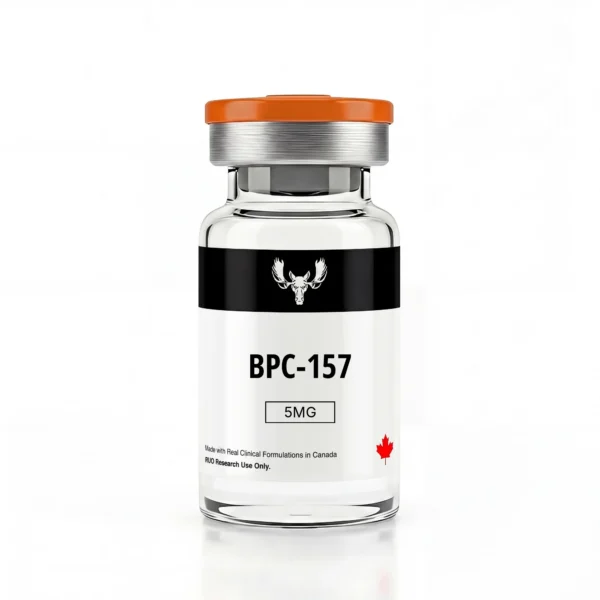
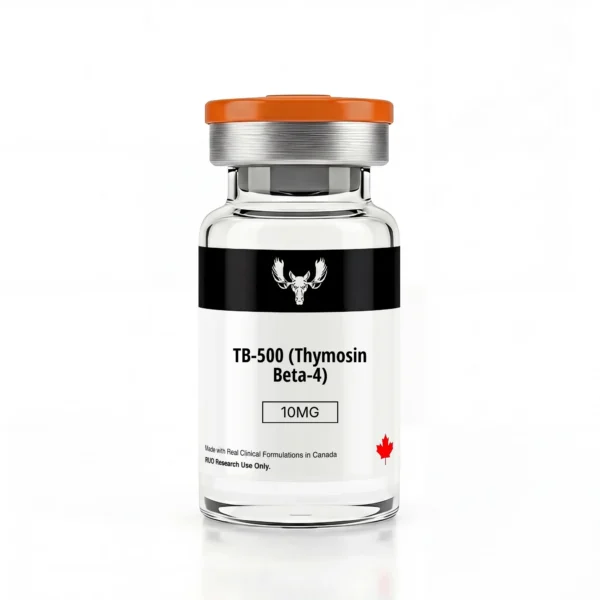
The side effect profile of peptides depends heavily on the class. GH secretagogues (CJC-1295, Ipamorelin, Sermorelin) can cause water retention, joint stiffness, numbness in the extremities, and temporary elevations in blood glucose at high doses — all dose-dependent and generally reversible. Healing peptides (BPC-157, TB-500) are among the best-tolerated research peptides available, with the primary adverse effects limited to injection site reactions. The larger concern with peptides is product quality — as research chemicals, purity and dosing accuracy vary significantly between suppliers. Sourcing from a Canadian manufacturer with independent HPLC and mass spec verification eliminates this variable.
Steroid Side Effects
Anabolic steroid side effects are both better-documented and more serious. Short-term effects include acne, oily skin, mood swings, aggression, and elevated blood pressure. With extended use, the risks escalate significantly: HPTA suppression (often requiring months of PCT to resolve), gynecomastia from aromatisation to estrogen, hepatotoxicity from oral 17-alpha-alkylated compounds, dyslipidemia (reduced HDL, elevated LDL), and left ventricular hypertrophy. A comprehensive review in PMC (Angell et al.) documented elevated cardiovascular mortality among long-term AAS users. In women, virilisation effects (voice deepening, clitoral enlargement, facial hair) can be permanent even after cessation.
How Long Does Each Take to Work?
Timeline differences between peptides and steroids are significant and worth understanding before choosing a research protocol.
Peptides typically take 3–12 weeks to show measurable results, depending on the compound and goal. GH secretagogues like CJC-1295 and Ipamorelin begin improving sleep quality and fat metabolism within 2–4 weeks, but meaningful changes in lean mass and body composition require 2–3 months of consistent use. Healing peptides like BPC-157 can reduce inflammation and pain within days to two weeks. Anti-aging compounds show gradual improvements over months. The slower timeline reflects how peptides work — by stimulating natural processes rather than overriding them. According to a review cited in Frontiers in Pharmacology (2025), this biological pacing is also what makes peptide results more sustainable and better-maintained after a cycle ends.
Steroids deliver visible results in 1–3 weeks. Oral compounds like Dianabol can produce measurable strength changes within days. Injectable testosterone esters show full effects by weeks 4–5. The speed is real — but it comes at the cost of HPTA suppression that begins almost immediately and often takes longer to recover from than the cycle itself lasted.
Are Peptides Legal in Canada in 2026?
Peptides occupy a different legal category than anabolic steroids in Canada. As of 2026, most research peptides — CJC-1295, BPC-157, TB-500, IGF-1 LR3, Sermorelin, and similar compounds — are sold legally as research chemicals. They are not approved by Health Canada for human therapeutic use, but they are not controlled substances either. The Canadian peptide market has matured considerably — domestic manufacturers now operate with HPLC and mass spectrometry verification as a baseline standard, and same-day shipping from Canadian facilities is routine. WADA bans most performance-enhancing peptides in competitive sport, which is a separate consideration from their legal status for purchase and research.
Anabolic steroids, by contrast, remain Schedule III controlled substances under Canada’s Controlled Drugs and Substances Act in 2026 — unchanged from prior years. Possession without a valid prescription is illegal. This legal distinction is one of the clearest practical differences in the peptides vs steroids comparison for Canadian researchers.
Can Peptides and Steroids Be Combined?
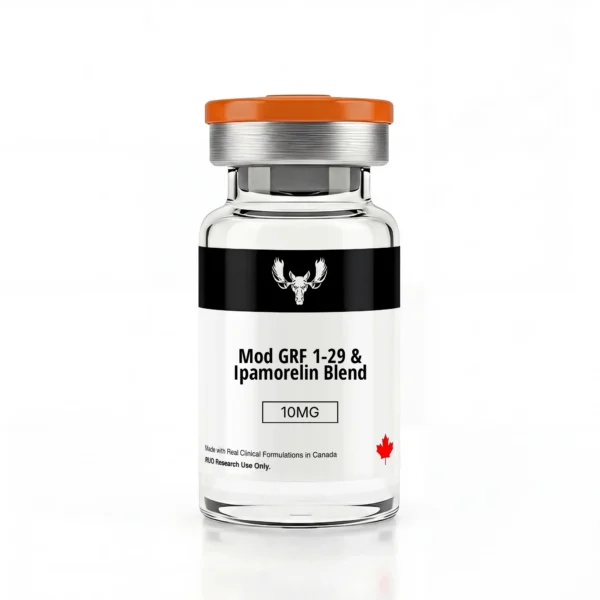
From a purely mechanistic perspective, yes — peptides and steroids don’t share receptor systems, so there’s no direct competitive interaction. In practice, healing peptides like BPC-157 and TB-500 are sometimes used during or after steroid cycles to counteract the connective tissue stress that accelerated muscle growth can create. CJC-1295 is sometimes included to maintain GH levels during AAS use. However, combining both increases protocol complexity, potential endocrine disruption from hormonal overlap, and dosing error risk. Any combined research protocol requires careful design and monitoring.
Frequently Asked Questions: Peptides vs Steroids in Canada
Are peptides safer than steroids?
Yes — by a significant margin for most use cases. Peptides work by supporting the body’s natural hormone signalling rather than overriding it. This means natural testosterone production stays intact, organ stress is minimal, and side effects are generally mild and dose-dependent. Steroids suppress natural hormone production, stress the liver and cardiovascular system, and carry well-documented long-term health risks. The trade-off is speed — steroids produce faster and more dramatic results, but at substantially higher physiological cost.
Can peptides build muscle like steroids?
Peptides can build lean muscle, but not at the same rate or magnitude as anabolic steroids. GH secretagogues like CJC-1295 and Ipamorelin produce sustained IGF-1 elevation that drives lean mass gains over 2–3 months. IGF-1 LR3 activates muscle IGF-1 receptors directly and has evidence for both hypertrophy and hyperplasia. But the sheer anabolic potency of exogenous testosterone and its analogs — which directly override protein synthesis pathways — is not replicated by any peptide. The question is whether the speed of steroid gains justifies the risks, not whether peptides are ineffective.
Is growth hormone a peptide or a steroid?
Growth hormone is a peptide hormone — a 191-amino-acid chain produced by the pituitary gland. It is not a steroid. The GH secretagogues sold as research peptides (CJC-1295, Ipamorelin, Sermorelin, Tesamorelin) stimulate the pituitary to produce more of its own GH — they are not exogenous growth hormone itself.
Do peptides show up on drug tests?
Yes. WADA tests specifically for banned peptides including growth hormone-releasing peptides (GHRPs), GHRH analogs, and other performance-enhancing compounds. Any athlete subject to anti-doping rules should treat most research peptides as banned substances and consult WADA’s prohibited list before beginning any protocol.
Are peptides legal to buy in Canada?
Yes — most research peptides are legal to purchase in Canada as research chemicals. They are not approved by Health Canada for therapeutic use, and WADA bans most for sport, but they are not controlled substances. Anabolic steroids are Schedule III controlled substances in Canada and are illegal to possess without a valid prescription.
What peptides are most similar to steroids in effect?
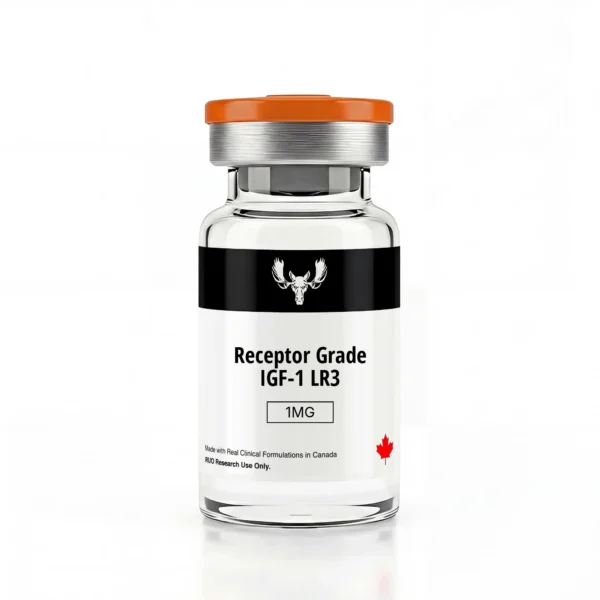
IGF-1 LR3 is the closest in terms of direct anabolic activity — it activates IGF-1 receptors on muscle tissue directly, driving both hypertrophy and hyperplasia. The CJC-1295 + Ipamorelin stack produces the closest functional parallel to the GH/IGF-1 axis effects of a mild steroid cycle, without the hormonal suppression. Neither matches the raw anabolic power of testosterone or its analogs, but both produce measurable, sustained lean mass gains with a far better safety profile.
Research Peptides Available in Canada
Boss Peptides manufactures research-grade peptides in Canada — verified at >99% purity by HPLC and mass spectrometry, with same-day shipping across Canada. Each of the compounds below represents a different category discussed in this guide, from GH axis stimulation to tissue repair to direct anabolic signalling.