Canadian Researcher Guide · 2026
GHK-Cu in Canada: Benefits, Research & Where to Buy (2026)
GHK-Cu is one of the most studied peptides in regenerative science — and one of the few that has a compelling research record across completely different fields simultaneously. Discovered in 1973 in human plasma, this copper-binding tripeptide has since accumulated over 50 years of data covering skin regeneration, wound healing, collagen biology, anti-inflammatory signalling, hair follicle health, and gene expression. This guide covers how it works, what the research actually shows, and which GHK-Cu formulation in Canada suits your research goals.
What Is GHK-Cu and Why Does Copper Matter?
GHK-Cu (Glycyl-L-Histidyl-L-Lysine copper complex) is a naturally occurring tripeptide — three amino acids, glycine, histidine, and lysine — bound to a copper(II) ion. It was first isolated from human plasma in 1973 by biochemist Loren Pickart, initially while studying liver tissue. He noticed it was unusually active, and what followed was five decades of research that kept finding new applications every time someone looked at a new biological system.
The peptide itself exists in human blood, saliva, and urine. Plasma concentrations are highest in young adults (around 200 ng/mL) and decline significantly with age — dropping to roughly 80 ng/mL by age 60. This age-related decline correlates with the skin thinning, slower wound healing, and reduced tissue resilience that characterise biological aging, which is one reason GHK-Cu has attracted so much interest in both anti-aging dermatology and regenerative medicine.
The copper component isn’t incidental. The Cu(II) ion binds to GHK through three nitrogen atoms — one from histidine’s imidazole ring, one from glycine’s alpha-amino group, and one from the deprotonated amide bond between the first two residues — creating a binding constant of around log K = 16.44 at physiological pH. This stability means the complex stays intact in biological conditions rather than immediately dissociating. The copper also serves as an essential cofactor for lysyl oxidase and lysyl hydroxylase — the enzymes responsible for collagen cross-linking and structural stability. Without copper, newly synthesised collagen fibres remain weak and disorganised.
How GHK-Cu Works: The Mechanisms
GHK-Cu doesn’t do just one thing — and that breadth is both what makes it scientifically interesting and what made researchers keep coming back to it. Here are the primary mechanisms identified across decades of research.
Collagen and Extracellular Matrix Remodelling
This is the most studied mechanism and the one with the most consistent data. GHK-Cu stimulates fibroblasts to produce both Type I collagen (the structural scaffold of skin and connective tissue) and Type III collagen (the flexible, early-repair collagen that appears first in wound sites). It also upregulates elastin, dermatan sulphate, chondroitin sulphate, and decorin — a proteoglycan that organises collagen fibres into ordered structures rather than the random arrangement that creates visible scarring.
Critically, GHK-Cu doesn’t just promote collagen synthesis — it also regulates matrix metalloproteinases (MMPs), the enzymes that break down extracellular matrix, alongside their inhibitors (TIMPs). The balance it strikes — promoting new synthesis while preventing excessive degradation — is what produces organised tissue remodelling rather than either fibrosis or tissue collapse. In rat wound models using GHK-incorporated collagen dressings, researchers observed a 9-fold increase in collagen synthesis compared to controls.
Angiogenesis and Wound Healing
GHK-Cu promotes VEGF expression and endothelial cell migration, driving new blood vessel formation at injury sites. New vessels deliver oxygen, nutrients, and repair factors — accelerating every phase of the healing process. In multiple animal wound models (ischemic wounds in rats, experimental wounds in rabbits, diabetic ulcer models), GHK-Cu treated groups consistently showed faster wound closure, reduced inflammatory cytokines (MMP-2, MMP-9, TNF-β), and higher levels of antioxidant enzymes. Research indicates potential wound closure acceleration of 40–50% compared to control treatments across different wound types.
A randomised, double-blind clinical trial published in the Archives of Facial Plastic Surgery applied GHK-Cu to post-laser-resurfaced skin. While the primary erythema endpoint didn’t reach statistical significance (likely because laser resurfacing already drives significant healing), patient satisfaction was significantly higher in the GHK-Cu group, and wrinkle improvement data trended positive — consistent with the compound’s known collagen-stimulating mechanism.
Gene Expression Modulation and DNA Repair
What separates GHK-Cu from most skincare and recovery compounds is its effect at the genetic level. Large-scale gene expression analyses using the Broad Institute’s Connectivity Map found that GHK significantly increased expression of 47 DNA repair genes (with a suppression of just 5) — suggesting it actively helps cells repair damage that accumulates with age and UV exposure. In some experimental models, GHK has been shown to restore gene expression patterns associated with younger tissue physiology in aged cells — effectively resetting the transcriptional profile of aging fibroblasts toward more youthful patterns of activity.
This gene-level effect may explain why GHK-Cu’s benefits appear in such diverse systems. It’s not targeting a single receptor or pathway — it’s broadly influencing the regulatory landscape that governs tissue maintenance across multiple cell types simultaneously.
Anti-Inflammatory and Antioxidant Activity
GHK-Cu suppresses NFκB signalling — one of the master regulators of inflammation — and reduces levels of the pro-inflammatory cytokine TNF-β. It also elevates glutathione (GSH) and ascorbic acid levels in wound tissue, both key antioxidants that protect cells from oxidative stress during the repair process. In COPD research, GHK-Cu demonstrated the ability to restore normal function to fibroblasts damaged by chronic inflammation — an application far removed from skin biology that illustrates the compound’s systemic reach.
Hair Follicle Stimulation
GHK-Cu promotes proliferation of hair follicle cells and supports the dermal papilla — the structure at the follicle base that controls hair growth cycles. Research has documented increased hair follicle size and stimulation of follicle growth in animal models. The mechanism runs through GHK’s broader ability to increase blood vessel growth around follicles and stimulate growth factor signalling in the follicle environment. While human hair growth data is less comprehensive than the wound healing evidence, the mechanistic case is consistent with GHK’s known biology.
What the Human Research Shows
GHK-Cu has more controlled human trial data than most peptides sold in Canada — largely because its cosmetic applications have driven clinical investment over decades.
A human trial by Abdulghani et al. (1999) compared topical GHK-Cu against vitamin C and retinoic acid for collagen production, confirmed via skin biopsy. GHK-Cu resulted in collagen increases in 70% of volunteers — outperforming both comparators. A randomised, double-blind clinical trial with female volunteers applying GHK-Cu (encapsulated in nano-lipid carriers) twice daily for 8 weeks found a 31.6% reduction in wrinkle volume compared to the peptide Matrixyl® 3000, and a 55.8% reduction in wrinkle volume and 32.8% reduction in wrinkle depth compared to control serum. Multiple placebo-controlled clinical studies in women around age 50 have found GHK-Cu to improve skin density, firmness, elasticity, fine lines, and reduction of photodamage — making it one of the better-evidenced anti-aging peptides available.
Clinical trials on diabetic ulcers and Mohs surgical wounds found GHK-Cu significantly improved re-epithelialisation and overall wound healing, extending the evidence base beyond cosmetic applications into genuine wound care.
GHK-Cu Benefits: Skin, Recovery, and Beyond
GHK-Cu vs. GHK Basic (Tripeptide-1): What’s the Difference?
This distinction is worth understanding before choosing a product. GHK-Cu is the copper-bound complex — the full active form of the peptide that includes the Cu(II) ion. The copper component is what enables the most potent biological effects: it’s required for the enzymatic reactions that drive proper collagen cross-linking, and it amplifies the gene-regulatory activity of the bare peptide significantly.
GHK Basic (Tripeptide-1) is the same three-amino-acid sequence (glycine-histidine-lysine) without the copper. It retains the peptide’s ability to interact with cell surface receptors and trigger some collagen and ECM signalling, but without the copper cofactor activity that drives the strongest wound healing and gene expression effects. It’s used in cosmetic formulations where copper stability or concentration is a formulation challenge, and in research contexts where isolating the peptide-only effects is the goal.
For most research applications targeting wound healing, skin regeneration, and tissue repair, GHK-Cu is the active form of choice. GHK Basic is more appropriate for topical skin applications where a copper-free vehicle is preferred, or as a standalone variable in comparative research.
Our GHK-Cu Products: Which One Is Right for Your Research?
Research Grade · Injectable
GHK-Cu (Copper) (50mg)
Best for: Systemic tissue repair · Wound healing research · Athletic recovery · Anti-aging studies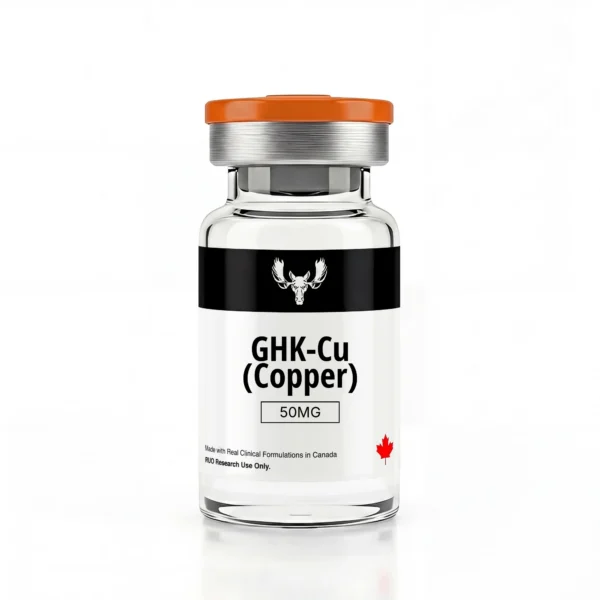
Who This Is For
The GHK-Cu (Copper) (50mg) is the full copper-bound complex in lyophilised powder form — the most bioactive version of the peptide and the one used in the majority of wound healing and gene expression research. At 50mg per vial, it provides a substantial supply for extended research protocols.
This is the formulation for researchers studying GHK-Cu’s systemic effects — collagen production, DNA repair gene activation, anti-inflammatory signalling, wound closure, and tissue remodelling. It delivers the full spectrum of GHK-Cu activity including the copper-mediated enzymatic effects that GHK Basic cannot replicate. Because it’s the complete active complex, it’s also the right choice for any protocol where the copper cofactor effects (lysyl oxidase activation, proper collagen cross-linking) are relevant research variables.
For athletic recovery research, this is the formulation most relevant to the connective tissue support data — particularly the anti-fibrotic effects that prevent excess scar tissue accumulation after repeated training micro-tears, and the collagen remodelling effects that support tendon and ligament integrity over training cycles.
Key Benefits
- Full copper-bound active complex — all GHK-Cu mechanisms accessible including copper-dependent enzymatic effects
- 50mg per vial — substantial supply for multi-week extended research protocols
- Manufactured in Canada, verified >99% purity by HPLC and mass spectrometry
- Lyophilised powder — stable storage, reconstitute as needed for each research session
- Same-day shipping from Canada — no international customs or temperature exposure risks
Topical Formulation
GHK-Cu Topical (200mg)
Best for: Skin regeneration · Anti-aging · Post-procedure recovery · Topical wound healing research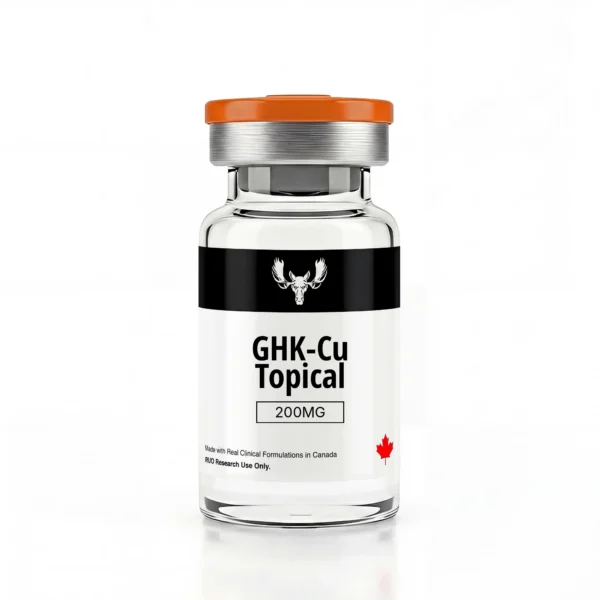
Who This Is For
The GHK-Cu Topical (200mg) is formulated specifically for topical research applications — skin regeneration, wrinkle reduction, post-procedure healing, and anti-aging studies. At 200mg, it provides a high-dose supply suited to extended topical application protocols.
Research has confirmed that GHK-Cu can penetrate the stratum corneum — the skin’s outer barrier layer — in sufficient quantities to activate regenerative events in the dermis below. The permeability of copper complexes increases with higher pH, and GHK-Cu specifically (along with its dimer (GHK)₂-Cu) has been confirmed to migrate through membrane models of the stratum corneum where other peptides cannot. This makes the topical route genuinely effective rather than cosmetically superficial.
The double-blind clinical data supports this route directly: the 8-week trial using nano-lipid carrier GHK-Cu found 55.8% wrinkle volume reduction and 32.8% wrinkle depth reduction vs. control serum. For researchers studying the anti-aging mechanisms of GHK-Cu — collagen and elastin upregulation, dermal thickening, photodamage reversal — this is the most directly relevant formulation.
Key Benefits
- Formulated for topical application — optimised for dermal penetration research
- 200mg per vial — high-dose supply for extended topical protocol studies
- Directly relevant to the double-blind clinical trial data on wrinkle reduction and skin density
- Post-procedure application research — laser resurfacing, microneedling, chemical peel recovery
- Manufactured in Canada, verified >99% purity, same-day shipping
Copper-Free Variant · Topical
GHK Basic (Tripeptide-1) (200mg)
Best for: Peptide-only baseline research · Copper-free topical formulations · Comparative studies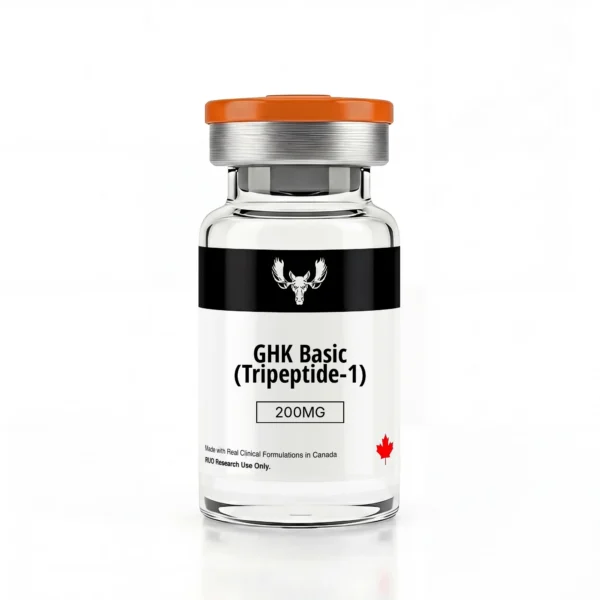
Who This Is For
The GHK Basic (Tripeptide-1) (200mg) is the copper-free form of the GHK sequence — the bare tripeptide without the Cu(II) ion. It retains the peptide’s cell receptor interactions and some ECM signalling capability, but does not include the copper-dependent enzymatic effects that drive GHK-Cu’s strongest wound healing and gene expression activity.
Its primary research value is in two contexts. First, as a comparative control against GHK-Cu — allowing researchers to isolate the contribution of the copper component to observed effects by running parallel protocols with GHK Basic and GHK-Cu under identical conditions. Second, in topical formulations where a copper-free vehicle is required for stability or compatibility reasons, but the peptide’s baseline receptor-level collagen signalling is still desired.
Tripeptide-1 (GHK) is widely used in cosmetic formulations and is listed in the INCI (International Nomenclature of Cosmetic Ingredients) database under this name. For researchers studying the peptide’s collagen-stimulating properties specifically — rather than the full copper complex — this is the appropriate compound. It also offers a cost-effective entry point for preliminary screening studies before committing to full GHK-Cu protocols.
Key Benefits
- Copper-free GHK tripeptide — isolates peptide-only effects from copper-dependent mechanisms
- 200mg per vial — high-dose supply for extended topical comparative studies
- Compatible with copper-sensitive formulation environments where GHK-Cu may not be stable
- INCI-listed as Tripeptide-1 — widely referenced in cosmetic peptide research literature
- Manufactured in Canada, verified >99% purity, same-day shipping
GHK-Cu for Skin vs. Athletic Recovery: How the Same Peptide Serves Both
One of the more interesting aspects of GHK-Cu research is how the same biological mechanisms produce useful effects in two completely different research contexts — cosmetic dermatology and athletic recovery — without any modification to the compound itself.
For skin researchers, the key mechanisms are collagen and elastin upregulation in the dermis, DNA repair gene activation that reverses UV-induced cellular damage, MMP/TIMP balance that remodels existing collagen architecture, and the net result of firmer, denser, more resilient skin with reduced visible aging markers.
For athletic recovery researchers, the same collagen upregulation mechanism applies to tendons and ligaments rather than dermis. The anti-fibrotic effects that prevent disorganised scar collagen in skin wounds also prevent excess fibrotic scar tissue from accumulating in repeatedly stressed connective tissue. The antioxidant elevation (GSH, ascorbic acid) that protects skin cells from UV-induced oxidative damage also protects muscle cells from exercise-induced oxidative stress. The angiogenesis that accelerates skin wound closure also accelerates blood supply restoration to micro-damaged muscle tissue.
The biology doesn’t change based on what you’re trying to achieve — the research context does. GHK-Cu operates across all these systems simultaneously, which is why the 50mg injectable formulation is relevant to both audiences, while the topical formulations are more specific to skin research applications.
Safety Profile and Considerations
GHK-Cu has one of the most reassuring safety records in the peptide space, supported by decades of cosmetic use, multiple controlled human trials, and extensive preclinical data. Topical application is well tolerated in the vast majority of users — the most common adverse effects reported are mild and transient skin irritation at the application site, particularly at higher concentrations.
Because GHK-Cu is a naturally occurring compound found in human plasma at measurable concentrations, it doesn’t introduce a foreign molecule — it supplements a naturally declining signal. The copper content is present at concentrations well below toxicological thresholds, and the complex’s stability means the copper is delivered in a bound, bioavailable form rather than as free ionic copper, which reduces the irritation risk associated with copper salts.
Frequently Asked Questions About GHK-Cu in Canada
What is GHK-Cu used for in Canada?
GHK-Cu is used in Canada primarily for skin regeneration and anti-aging research (collagen synthesis, wrinkle reduction, photodamage reversal), wound healing studies, and athletic recovery research (connective tissue support, oxidative stress reduction, anti-fibrotic effects). All three Boss Peptides GHK-Cu formulations are sold as research chemicals and are not approved by Health Canada for therapeutic use.
What is the difference between GHK-Cu and GHK Basic?
GHK-Cu is the copper-bound active complex — the full biologically active form. GHK Basic (Tripeptide-1) is the same three-amino-acid sequence without the copper ion. GHK-Cu has stronger wound healing, gene expression, and collagen cross-linking effects because the copper cofactor is required for key enzymatic reactions. GHK Basic retains some collagen signalling activity and is useful for comparative research or copper-free topical formulations.
Does GHK-Cu actually penetrate skin when applied topically?
Yes — research has confirmed that GHK-Cu (and its dimer (GHK)₂-Cu) can migrate through membrane models of the stratum corneum in quantities sufficient to activate regenerative events in the dermis. The permeability increases with higher pH formulations. This is what distinguishes it from many cosmetic peptides that remain in the epidermis without reaching the fibroblasts in the dermis where collagen is actually synthesised.
How long does it take to see results from GHK-Cu?
The 8-week double-blind clinical trial (twice-daily topical application) produced significant wrinkle volume and depth reductions. Most controlled studies use 8–12 week timelines for measuring skin density and collagen changes. For wound healing applications, effects on tissue repair are more immediate — accelerated closure and reduced inflammation are observable within days in animal models.
Can GHK-Cu be stacked with other peptides?
Yes. GHK-Cu is commonly studied alongside BPC-157 and TB-500 in recovery-focused protocols — Boss Peptides even carries a BPC-157 & TB-500 & GHK-Cu Blend (70mg) that combines all three. For skin research, GHK-Cu is often combined with other matrix-remodelling compounds. Its anti-inflammatory mechanism complements peptides that work through different pathways without mechanistic overlap.
Where to Buy GHK-Cu in Canada
For researchers looking to buy GHK-Cu in Canada, the same sourcing standards apply as for any research-grade peptide: HPLC purity verification, mass spectrometry identity confirmation, and a certificate of analysis from an independent third-party lab. For topical formulations specifically, the additional consideration is formulation stability — GHK-Cu’s susceptibility to enzymatic degradation means the lyophilised powder format (reconstituted fresh as needed) is more stable than pre-dissolved liquid products from vendors without documented storage protocols.
Boss Peptides manufactures all three GHK-Cu formulations in Canada, ships same-day with free shipping on orders over $150, and publishes COAs on every product page. All products are verified at >99% purity.
- 1 GHK-Cu (Copper) 50mg — the full copper-bound complex for systemic tissue repair, wound healing, and recovery research.
- 2 GHK-Cu Topical 200mg — formulated for topical application, directly relevant to the double-blind skin regeneration and anti-aging clinical trial data.
- 3 GHK Basic (Tripeptide-1) 200mg — copper-free variant for comparative research or copper-sensitive topical formulation studies.
The Bottom Line on GHK-Cu in Canada
GHK-Cu is genuinely unusual in the peptide research space — a molecule that’s been continuously studied for over 50 years and keeps revealing new mechanisms in new biological contexts. The skin and wound healing evidence is the strongest, with multiple controlled human trials confirming the collagen-stimulating and wrinkle-reducing effects that the preclinical data predicted. The gene expression findings — 4,000+ regulated genes, DNA repair activation, aging cell reprogramming — are some of the most striking results in all of peptide biology, even though their full clinical implications are still being worked out.
For researchers in Canada studying tissue regeneration, anti-aging biology, wound healing, or athletic recovery, GHK-Cu offers a breadth of documented biological activity that very few peptides can match. The three formulations Boss Peptides carries cover the full range of research applications — injectable for systemic and wound healing work, topical for skin biology, and copper-free for comparative and formulation research.