

Canadian Researcher Guide · 2026
Peptides for Weight Loss in Canada: How They Work & What the Research Shows
The peptide category most relevant to weight loss isn’t the same one that dominates bodybuilding forums. It’s GLP-1 receptor agonists — a class of compounds with FDA and Health Canada approval, Phase III clinical trial data, and weight loss results that were unheard of in pharmacology until a few years ago. This guide covers how they work, what the trials actually found, the differences between Semaglutide and Tirzepatide, and what to know about each as a Canadian researcher.
Do Peptides Actually Work for Weight Loss?
The short answer, for the right category of peptide: yes, and the clinical evidence is unusually strong. GLP-1 receptor agonists are the most rigorously studied weight loss compounds in the history of pharmacology, with multiple large-scale randomized controlled trials showing results that consistently outperform every prior weight loss medication category.
The 2021 STEP 1 trial of Semaglutide — 1,961 participants, 68 weeks, published in the New England Journal of Medicine — found that subjects taking 2.4 mg weekly Semaglutide lost an average of 14.9% of body weight compared to 2.4% in the placebo group. 86.4% of the Semaglutide group achieved at least 5% weight reduction, vs. 31.5% on placebo. 50.5% lost 15% or more of their body weight. These are not modest effects.
Tirzepatide’s results are even more striking. The SURMOUNT-4 trial found that adults with obesity or overweight achieved an average 20.9% weight reduction at 36 weeks. Participants who continued on Tirzepatide for a further 52 weeks lost an additional 5.5%, while those who switched to placebo regained 14% of their body weight — a finding that clarified both the drug’s effectiveness and its maintenance requirements.
How GLP-1 Peptides Produce Weight Loss
GLP-1 (glucagon-like peptide-1) is a hormone naturally released by intestinal cells after eating. It plays several roles in regulating the metabolic response to food. GLP-1 receptor agonists mimic this hormone, activating the same receptors with a longer-lasting effect than the natural peptide.
The weight loss mechanism runs through several parallel pathways:
Tirzepatide adds a second mechanism on top of all of the above. As a dual GLP-1 and GIP (glucose-dependent insulinotropic polypeptide) receptor agonist, it also activates GIP receptors, which play a role in lipid metabolism and insulin secretion. This dual-receptor activation is the primary reason Tirzepatide’s weight loss results exceed Semaglutide’s in head-to-head comparisons.
The Two Key Peptides for Weight Loss Research
GLP-1 Receptor Agonist
Semaglutide
Mechanism: GLP-1 receptor activation · Evidence level: Phase III human trials, FDA & Health Canada approved (Wegovy/Ozempic)
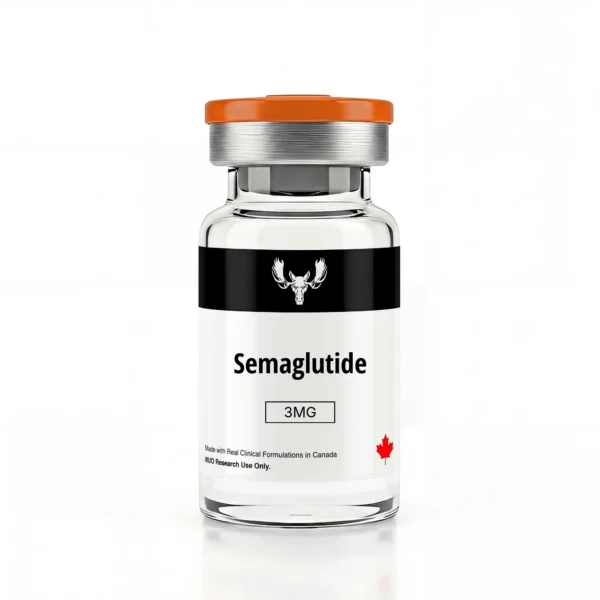
Semaglutide is a GLP-1 receptor agonist developed by Novo Nordisk. It’s available under three brand names: Ozempic (approved for type 2 diabetes), Wegovy (approved for chronic weight management), and Rybelsus (oral tablet form for diabetes). Of these, Wegovy is the formulation with specific weight management approval — its Phase III STEP trial program is the most comprehensive weight loss trial dataset ever compiled for a pharmaceutical compound.
The STEP 1 trial results are the most cited: 14.9% average body weight reduction over 68 weeks in adults with obesity or overweight, vs. 2.4% on placebo. More than half of participants on Semaglutide achieved ≥15% weight loss — a threshold previously associated only with bariatric surgery. A separate cardiovascular outcomes trial (SELECT, 2023) found that Semaglutide reduced major cardiovascular events by 20% in people with overweight or obesity without diabetes, broadening its clinical significance beyond weight loss alone.
Semaglutide’s half-life of approximately 7 days allows once-weekly subcutaneous injection — a major practical advantage over daily-injection GLP-1 agonists like Liraglutide. It works by binding to GLP-1 receptors throughout the body — in the pancreas, brain, gut, and cardiovascular tissue — producing effects across all the weight regulation pathways described above.
Our Semaglutide (3mg) is manufactured in Canada, verified at >99% purity by HPLC and mass spectrometry, and ships same-day. For research use only.
Shop Semaglutide (3mg) →Dual GLP-1 + GIP Receptor Agonist
Tirzepatide
Mechanism: Dual GLP-1 + GIP receptor activation · Evidence level: Phase III human trials, FDA approved (Zepbound/Mounjaro)
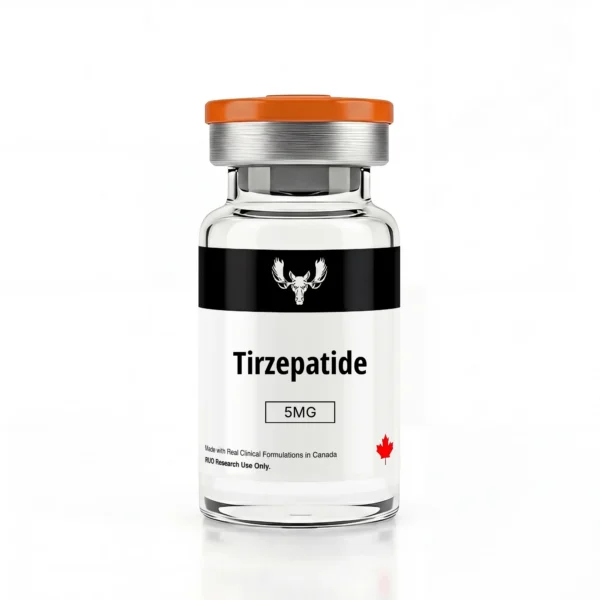
Tirzepatide is Eli Lilly’s dual GLP-1 and GIP receptor agonist, approved under the brand name Zepbound for weight management and Mounjaro for type 2 diabetes. The dual mechanism is what distinguishes it from Semaglutide and every prior GLP-1 drug — by activating both GIP and GLP-1 receptors simultaneously, it produces a broader metabolic effect than GLP-1 agonism alone.
The SURMOUNT trial program produced the most impressive weight loss results ever recorded for a pharmaceutical compound. The SURMOUNT-1 trial found that patients on the highest dose (15 mg weekly) achieved an average 22.5% body weight reduction over 72 weeks. The SURMOUNT-4 trial, which studied maintenance after initial weight loss, found that continuing Tirzepatide resulted in an additional 5.5% loss at 52 weeks, while those switched to placebo regained 14% — confirming that the drug’s effects depend on continued use.
GIP receptor activation contributes to Tirzepatide’s superior results through enhanced insulin secretion, improved lipid metabolism, and what researchers believe is a synergistic interaction with GLP-1 receptor signalling that amplifies appetite suppression beyond what either receptor pathway produces independently. GIP receptors are also found in adipose tissue, where their activation may directly influence fat cell metabolism.
Tirzepatide is administered as a once-weekly subcutaneous injection. The recommended starting dose is 2.5 mg, escalating in 2.5 mg increments every 4 weeks to a target of 5–15 mg depending on tolerance and response. Our Tirzepatide (5mg) is manufactured in Canada, verified at >99% purity, and ships same-day. For research use only.
Shop Tirzepatide (5mg) →Semaglutide vs. Tirzepatide: How They Compare
Both compounds work through the GLP-1 pathway, but their differences in mechanism, efficacy, and side effect profile are clinically meaningful. Here’s a direct comparison based on the trial data:
| Feature | Semaglutide | Tirzepatide |
|---|---|---|
| Receptor targets | GLP-1 only | GLP-1 + GIP (dual agonist) |
| Average weight loss (trials) | ~14.9% (STEP 1, 68 weeks) | ~20.9% (SURMOUNT-4, 36 weeks) |
| Dosing frequency | Once weekly (subcutaneous) | Once weekly (subcutaneous) |
| FDA approval (weight) | Yes — Wegovy (2021) | Yes — Zepbound (2023) |
| Cardiovascular data | 20% reduction in MACE (SELECT trial) | Ongoing SURMOUNT-MMO trial |
| Primary side effects | Nausea, vomiting, diarrhea, constipation | Nausea, vomiting, diarrhea, constipation |
| GI tolerability | Generally well tolerated with slow titration | Similar; GI effects may be slightly more pronounced at higher doses |
The weight loss difference between the two compounds is real and consistent across trials. Tirzepatide’s dual mechanism appears to produce a more powerful suppression of appetite and a stronger metabolic effect than GLP-1 alone. For researchers specifically studying weight reduction endpoints, Tirzepatide produces larger effects. For researchers studying the GLP-1 axis specifically, Semaglutide isolates that pathway more cleanly.
Side Effects and Safety Considerations
Both compounds share a similar side effect profile, driven primarily by the GLP-1-mediated slowing of gastric emptying. Most side effects are gastrointestinal, most common during dose escalation, and most resolve as the body adjusts.
Most Common Side Effects
Nausea is the most frequently reported side effect, particularly during the first few weeks of a new dose level. Vomiting, diarrhea, constipation, and abdominal discomfort are also common. Starting at the lowest dose and escalating slowly — which is the standard protocol for both compounds — substantially reduces the severity and incidence of these effects. Most participants in the STEP and SURMOUNT trials completed their full course despite GI side effects.
Less Common but Notable Risks
Both Semaglutide and Tirzepatide carry a black box warning for thyroid C-cell tumors based on rodent studies. The clinical relevance in humans is unclear — no human studies have confirmed this risk — but both compounds are contraindicated in people with personal or family history of medullary thyroid cancer or Multiple Endocrine Neoplasia type 2. Pancreatitis has been reported rarely. Hair loss is documented but generally transient.
Drug Interactions
Because both compounds delay gastric emptying, they can affect the absorption of oral medications. This is particularly relevant for oral contraceptives — the FDA recommends switching to non-oral contraception or adding barrier methods for the first 4 weeks of Tirzepatide and for 4 weeks after each dose increase. Medications with narrow therapeutic windows (thyroid hormones, anticoagulants) may also require monitoring.
Who These Peptides Are Studied For
The clinical trial populations for Semaglutide and Tirzepatide weight management approvals specifically included adults with obesity (BMI ≥30), and adults with overweight (BMI ≥27) plus at least one weight-related health condition — hypertension, type 2 diabetes, dyslipidemia, or cardiovascular disease. Semaglutide’s Wegovy approval also extends to adolescents aged 12 and above meeting the BMI threshold criteria.
These compounds are not studied for or indicated in people of healthy weight seeking aesthetic fat loss. The risk-benefit calculation — including the GI side effects, the contraindications, and the requirement for continued use to maintain weight loss — is calibrated for populations where excess weight is a significant health risk, not a cosmetic concern.
Frequently Asked Questions
How quickly do GLP-1 peptides produce weight loss?
Most people see early effects — reduced appetite, smaller portions feeling satisfying — within the first week or two. Measurable weight loss typically begins in the first month. The largest effects accumulate over 6–12 months of consistent use. The STEP and SURMOUNT trials measured their primary endpoints at 68–72 weeks, which is when the maximum weight loss was observed.
Do you regain weight after stopping?
Yes, to a significant degree. The SURMOUNT-4 trial found that participants who switched from Tirzepatide to placebo at 36 weeks regained 14% of body weight over the following 52 weeks. This is consistent with Semaglutide data showing similar weight regain after discontinuation. The underlying appetite dysregulation that drives obesity returns when the drug is stopped. Long-term or indefinite treatment is likely necessary to maintain effects — which is consistent with how any chronic condition is managed.
Is Tirzepatide better than Semaglutide for weight loss?
Based on current trial data, Tirzepatide produces larger average weight loss — roughly 20%+ vs. roughly 15% for Semaglutide. The dual GLP-1 + GIP mechanism appears to be the driver of this difference. However, individual responses vary considerably, Semaglutide has a longer safety track record, and it has cardiovascular outcome data (the SELECT trial) that Tirzepatide’s equivalent trial hasn’t yet concluded.
What is the status of these peptides in Canada?
Both Semaglutide and Tirzepatide have received Health Canada approval for their respective indications. As research chemicals, they are sold legally in Canada for laboratory use. They are not approved for unsupervised self-administration. Anyone considering these compounds for therapeutic use should consult a licensed healthcare provider.
How do I calculate the correct dose from a research vial?
Reconstitution and dosing calculations depend on the vial size, the volume of bacteriostatic water used, and the target dose. Our Peptide Dosage Calculator handles all of this automatically for any vial size.
Sourcing in Canada: What to Look For
The quality of research peptides varies enormously across suppliers, and for GLP-1 compounds specifically — which have significant physiological effects at microgram-level doses — purity and accurate concentration are critical variables. Underdosed, overdosed, or contaminated products produce unreliable research data at best, and safety risks at worst.
- 1 HPLC purity ≥99% — GLP-1 peptides like Semaglutide and Tirzepatide are complex molecules. HPLC testing confirms purity and removes synthesis byproducts. For these compounds specifically, >99% is the standard.
- 2 Mass spectrometry identity confirmation — Confirms the molecular weight matches the theoretical value for the stated compound. Essential for distinguishing Semaglutide from related GLP-1 analogs or degradation products.
- 3 Sterility testing — Both Semaglutide and Tirzepatide are injectable compounds. Sterility documentation from an independent lab is non-negotiable.
- 4 Canadian manufacturing and shipping — Domestic production means proper cold-chain handling throughout. These peptides degrade with heat exposure; import shipping through customs and uncontrolled temperatures increases degradation risk.
Boss Peptides manufactures and ships both Semaglutide and Tirzepatide from Canada, with COAs available on every product page and same-day shipping on most orders.
The Bottom Line
Semaglutide and Tirzepatide represent a genuine step change in what’s pharmacologically possible for weight management. The clinical trial data is the strongest ever produced for a weight loss compound — not a marginal improvement on prior medications, but a qualitative leap in efficacy. The mechanism is well-understood, the safety profile is characterised across tens of thousands of trial participants, and the regulatory approvals in both the US and Canada reflect that evidence base.
The honest caveats: these are medications that require continued use to maintain effect, they come with a real GI side effect burden during dose escalation, and they’re indicated for people with clinically significant excess weight — not general use. For researchers in Canada studying GLP-1 biology, metabolic disease, or weight regulation, these are the most data-rich compounds available in the peptide category.