

Canadian Researcher Guide · 2026
Best Peptides for Athletic Performance in Canada
Peptides have moved from the fringes of sports medicine into mainstream research — and for good reason. The right compound, sourced properly and used in the right context, can meaningfully change how fast tissue repairs, how well the body recomposes, and how deeply someone recovers between training sessions. This guide covers the peptides in Canada with the strongest research behind them for athletic performance, what each one actually does, and which products from our lineup are worth looking at.
What Makes a Peptide Useful for Athletic Performance?
Peptides are short chains of amino acids — smaller than proteins, but capable of acting as precise signalling molecules. The ones relevant to athletic performance work through a handful of mechanisms: stimulating growth hormone release, accelerating tissue repair, reducing inflammation at injury sites, promoting collagen synthesis, or improving fat metabolism. None of them are magic. What they do is sharpen the body’s existing repair and adaptation processes — which means they’re most useful when training, nutrition, and sleep are already dialled in.
It’s also worth being clear about what the research actually supports versus what’s community lore. Some peptides have genuine human trial data. Others have consistent and compelling animal data that hasn’t yet been replicated in humans. Both categories are covered below, with honest notes on where the evidence stands.
The Best Peptides for Athletic Performance
01
BPC-157
Best for: Injury Repair & Tendon Recovery
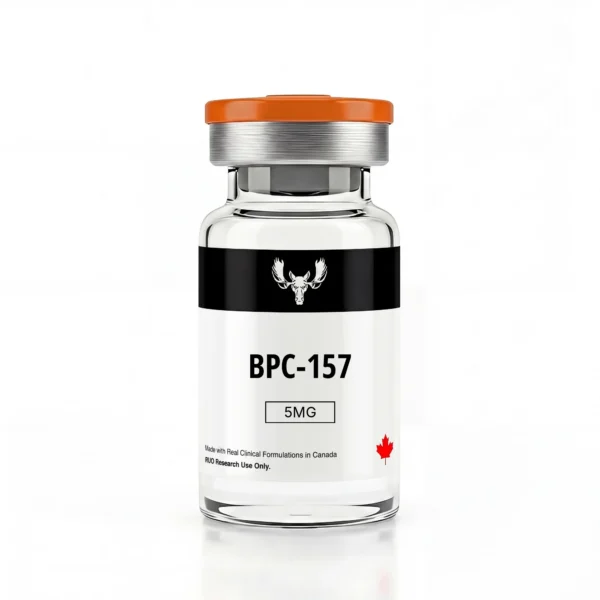
BPC-157 (Body Protection Compound-157) is a 15-amino-acid peptide derived from a protein found in human gastric juice. It has over 30 years of preclinical research behind it — more consistent animal data than almost any other research peptide — covering tendon healing, muscle repair, ligament recovery, gut protection, and anti-inflammatory effects.
For athletes, the tendon and ligament data is the standout. Multiple rat studies have shown significantly faster recovery of severed Achilles tendons with BPC-157, including faster restoration of biomechanical strength. The mechanism runs through VEGF receptor activation — BPC-157 stimulates new blood vessel growth at the injury site, which delivers more oxygen and nutrients and accelerates the repair timeline. It also activates the FAK-paxillin pathway, which controls how cells migrate into and attach to damaged tissue.
A 2025 systematic review in an orthopaedic sports medicine journal confirmed VEGF-driven angiogenesis as BPC-157’s primary mechanism across multiple studies. A small human retrospective study of 12 patients with chronic knee pain found that 7 of 12 reported pain relief lasting more than 6 months after a single BPC-157 injection — limited data, but it’s the closest thing to human evidence currently available.
BPC-157 is also notable for its stability. Unlike most peptides, it survives human gastric acid intact for over 24 hours, which is why both injectable and oral administration routes have been studied. For acute soft tissue injuries, subcutaneous injection near the injury site is the most common research approach.
Shop BPC-157 →02
TB-500 (Thymosin Beta-4 Fragment)
Best for: Systemic Recovery & Tissue Repair
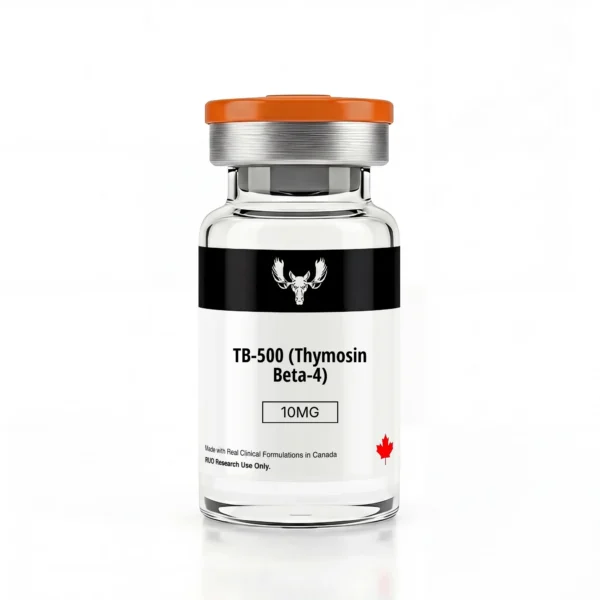
TB-500 is a synthetic fragment of Thymosin Beta-4, a naturally occurring protein involved in cell migration, wound healing, and inflammation regulation. Where BPC-157 tends to act locally at an injury site, TB-500 works more systemically — promoting cell migration and new blood vessel formation throughout the body, which makes it useful for athletes dealing with multiple injury sites or diffuse fatigue-related tissue damage rather than a single acute injury.
The mechanism behind TB-500’s healing effects centres on actin regulation. Thymosin Beta-4 sequesters actin monomers, which are required for cell movement. By controlling actin availability, it directly controls how quickly new cells can migrate into damaged tissue and begin repair. It also reduces inflammatory cytokines systemically, which shortens the inflammatory phase of healing without suppressing immune function broadly.
Animal studies show accelerated healing of skin wounds, cardiac tissue, and corneal injuries with Thymosin Beta-4. A key study by Goldstein et al. found that Thymosin Beta-4 improved cardiac function and reduced scarring after myocardial infarction in rats — relevant context for its broader tissue-repair profile. Human data is still limited, but the mechanistic case is strong and consistent across different tissue types.
BPC-157 and TB-500 are frequently stacked together in research protocols because they work through different but complementary mechanisms — BPC-157 driving local angiogenesis and growth factor activity, TB-500 driving systemic cell migration and inflammation reduction. Together they cover more of the healing process than either alone.
Shop TB-500 →03
Ipamorelin
Best for: Muscle Recovery, Fat Loss & Sleep Quality
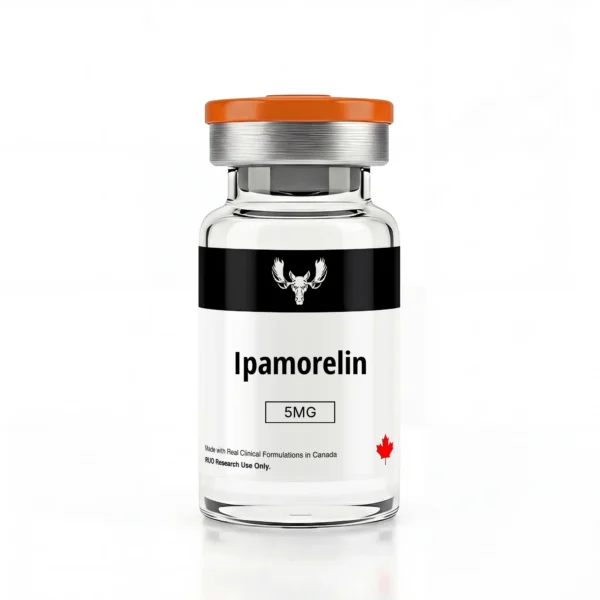
Ipamorelin is a selective growth hormone secretagogue — it triggers the pituitary gland to release GH in a clean, pulsatile burst without the cortisol, prolactin, or appetite elevation that older GHRPs like GHRP-6 produce. For athletes, this selectivity matters: you get the GH pulse and the downstream IGF-1 elevation that drives muscle protein synthesis and fat metabolism, without the hormonal side effects that complicate recovery.
The athletic performance case for Ipamorelin runs through three channels. First, GH and IGF-1 accelerate muscle protein synthesis and activate satellite cells — the stem cells responsible for muscle repair after training. A 9-week study (Lall et al., 2001) showed lean mass increases in both GH-deficient and normal subjects treated with Ipamorelin, with no organ enlargement unlike synthetic HGH. Second, GH is a primary lipolytic hormone, preferentially breaking down visceral fat — relevant for body composition athletes. Third, because Ipamorelin is typically dosed before bed, the GH pulse aligns with the body’s natural nocturnal GH window, improving slow-wave sleep depth and quality, which is where most physical recovery happens.
Ipamorelin also passed through Phase II human clinical trials (Beck et al., 2014) without any serious adverse events — making it one of the better-characterized peptides in the GHRP class from a safety standpoint.
Our lineup includes Ipamorelin (5mg) standalone, as well as blends that pair it with GHRH-axis peptides for a synergistic GH pulse — the Mod GRF 1-29 & Ipamorelin Blend (10mg) being the most widely used GHRH + GHRP combination in peptide research.
Shop Ipamorelin →04
Mod GRF 1-29 (CJC-1295 No DAC)
Best for: GH Pulse Amplification & Lean Mass
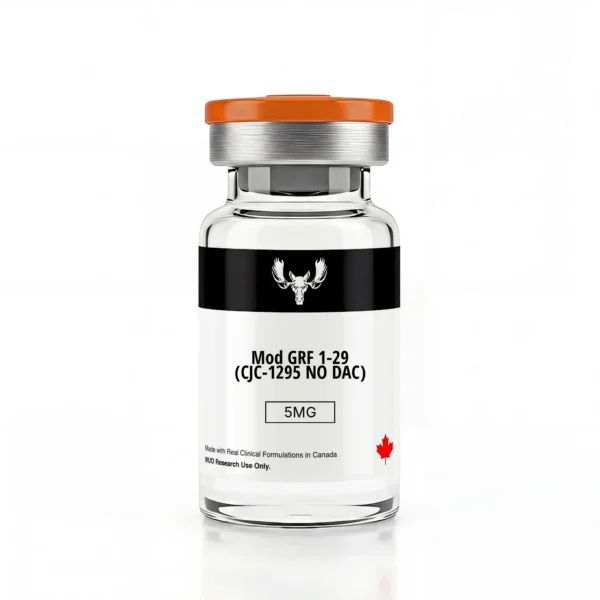
Mod GRF 1-29 is a stabilized analog of the first 29 amino acids of GHRH — the hypothalamic hormone that signals the pituitary to produce and release GH. Its four structural modifications give it roughly 10–15x the half-life of native GHRH (about 30 minutes vs. 2–3 minutes), without disrupting the body’s natural pulsatile GH rhythm the way longer-acting variants like CJC-1295 with DAC do.
Research using a Mod GRF analog found subjects gained an average of 1.26 kg of lean body mass over 4 months, with secondary improvements in skin thickness and insulin sensitivity. The Teichman et al. (2006) human trial — two randomized, placebo-controlled studies in adults aged 21–61 — found that GHRH analog administration raised GH by 2–10 fold and IGF-1 by 1.5–3 fold, with no serious adverse reactions. A follow-up proteomic study (Sackmann-Sala et al., 2009) confirmed those IGF-1 increases correlated with measurable decreases in fat mass and increases in lean mass.
For athletes, the most common protocol pairs Mod GRF 1-29 with Ipamorelin in the same injection — hitting the GHRH receptor and the ghrelin receptor simultaneously to produce a synergistic GH pulse larger than either compound alone. The Mod GRF 1-29 / CJC-1295 No DAC (5mg) standalone lets researchers build custom stacks, while the Mod GRF 1-29 & Ipamorelin Blend (10mg) comes pre-blended for convenience.
Shop Mod GRF 1-29 →05
Sermorelin
Best for: GH Optimization & Long-Term Recovery
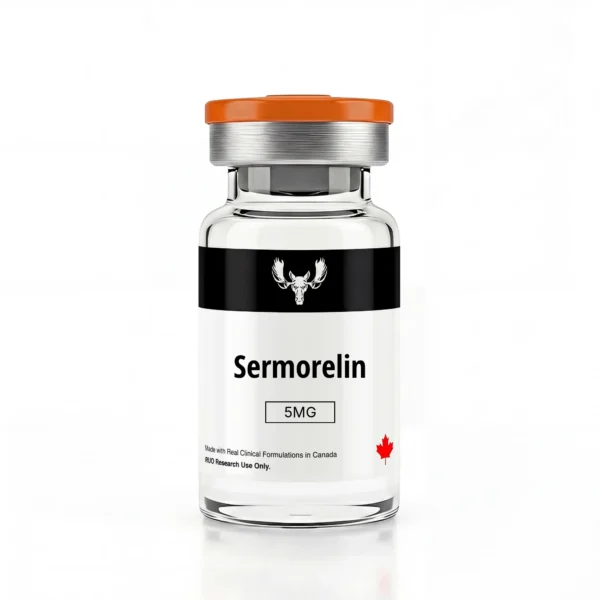
Sermorelin is the first 29 amino acids of GHRH in pharmaceutical form — it was FDA-approved under the brand name Geref for pediatric GH deficiency, giving it a clinical track record that most research peptides don’t have. Its first clinical studies go back to the 1970s, and it’s been used in adult hormone optimization clinics long enough to generate real follow-up data.
For athletes, Sermorelin works at a slower pace than Ipamorelin or Mod GRF 1-29 but within a cleaner physiological range. A double-blind, placebo-controlled trial in the Journal of the American Geriatrics Society (2002) found that after six months, Sermorelin subjects showed increased lean body mass and reduced fat mass compared to placebo — modest but statistically significant changes that occurred without HGH’s side effect profile. Because somatostatin feedback remains intact with Sermorelin, GH can’t run supraphysiological; you get optimization within the body’s own regulated range.
Athletes who aren’t chasing dramatic short-term GH spikes but want a sustainable long-term protocol tend to gravitate toward Sermorelin. Our Sermorelin (5mg) standalone covers the GHRH pathway alone, while the Sermorelin & Ipamorelin Blend (10mg) adds Ipamorelin’s ghrelin receptor activation for a synergistic two-pathway stack.
Shop Sermorelin →06
Tesamorelin
Best for: Visceral Fat Reduction & Body Recomposition
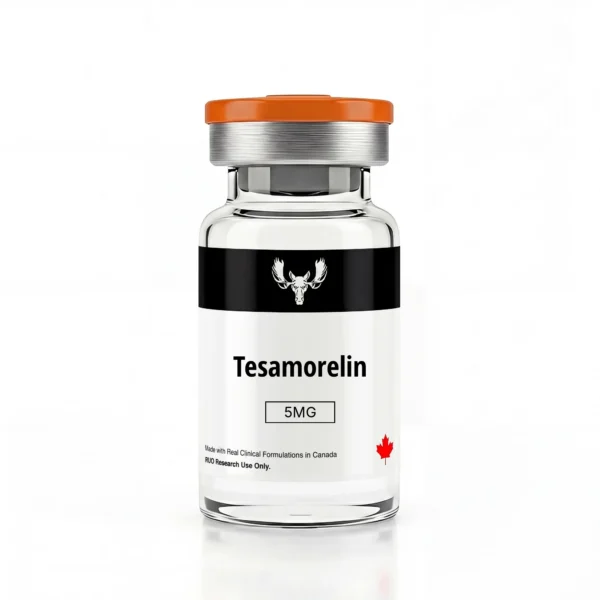
Tesamorelin is the only GHRH analog with FDA approval — used clinically under the brand name Egrifta for HIV-associated lipodystrophy. That approval means it has more controlled human trial data than any other GHRH peptide, which is a meaningful distinction in a space where most evidence is preclinical.
The FDA approval specifically covers visceral fat reduction, and the data behind it is specific: the REDUCE trial found a 4.7% absolute decrease in hepatic fat (a 37% relative reduction in liver fat), with 35% of Tesamorelin subjects achieving hepatic fat fraction below 5% vs. just 4% in the placebo group. It also slowed liver fibrosis progression — 10.5% vs. 37.5% in placebo. For athletes focused on body recomposition, particularly reducing trunk and abdominal fat while preserving lean mass, Tesamorelin is the most clinically validated option in the GH secretagogue category.
When combined with Ipamorelin, the two peptides approach GH release from complementary receptor pathways, and research in lipodystrophy models found the combination produced more pronounced visceral fat reduction than Tesamorelin alone. Our Tesamorelin & Ipamorelin Blend (8mg) pairs these two for researchers targeting body composition and metabolic function specifically. The Tesamorelin & CJC-1295 (Mod GRF 1-29) & Ipamorelin Blend (12mg) adds Mod GRF 1-29 for triple-pathway GH axis coverage.
Shop Tesamorelin →07
GHRH + GHRP Stacks
Best for: Maximum GH Pulse & Comprehensive Recovery
Most experienced researchers don’t use a single GH secretagogue — they stack a GHRH analog (Sermorelin, Mod GRF 1-29, or Tesamorelin) with a GHRP (Ipamorelin). The reason is straightforward: GHRH peptides and GHRPs work through completely different receptors — the GHRH receptor and the ghrelin receptor respectively. Activating both at the same time produces a synergistic GH pulse that’s larger than either compound alone.
This dual-receptor approach more closely mimics how the body naturally controls GH release than either peptide type alone. For athletes, a larger GH pulse means a stronger downstream IGF-1 signal, which translates to better muscle protein synthesis, faster tissue repair, and more pronounced lipolysis in the hours following injection.
The choice of which GHRH peptide to pair with Ipamorelin depends on the research goal. Sermorelin for a conservative, sustainable protocol. Mod GRF 1-29 for a stronger pulse with preserved pulsatility. Tesamorelin when visceral fat reduction is a primary target. The Sermorelin & GHRP-6 & GHRP-2 Blend (9mg) covers both ghrelin receptor subtypes with Sermorelin for researchers wanting the broadest GHRP coverage.
How to Choose the Right Peptide for Your Goals
The peptides above aren’t interchangeable. Each one targets a different aspect of athletic performance. Here’s a simple breakdown by goal:
What to Look for When Buying Peptides in Canada
The peptide market in Canada has no shortage of vendors, and quality varies dramatically. A vial of Ipamorelin or BPC-157 that hasn’t been properly synthesized, stored, or tested won’t deliver reliable research results — and if it’s injectable, it carries real contamination risk. Here’s what the minimum standard looks like:
- 1 HPLC purity of 98% or higher — High-performance liquid chromatography is the standard method for measuring peptide purity. Anything below 98% is a red flag.
- 2 Mass spectrometry identity confirmation — Confirms the compound in the vial is actually what’s on the label, not a cheaper substitute or degraded byproduct.
- 3 Sterility testing — Critical for any injectable peptide. Contamination is the primary real-world safety risk with research peptides, not the compounds themselves.
- 4 Third-party COAs — The certificate of analysis should come from an independent lab, not the vendor’s own internal testing. Ask to see it before you buy.
- 5 Ships from Canada — Domestic shipping means faster delivery, less exposure to customs, and a supplier subject to Canadian regulations.
Boss Peptides is HPLC tested and ships from Canada, with third-party COAs published on every product page. Use our Peptide Dosage Calculator to handle reconstitution volumes and syringe unit calculations for any vial size.
Peptides vs. Steroids: What’s Actually Different
This comparison comes up constantly in athletic circles, so it’s worth being direct about it. Anabolic steroids are synthetic testosterone derivatives that flood the body with androgens, suppress natural testosterone production, and carry well-documented risks to cardiovascular health, liver function, and hormonal balance. The suppression of natural hormone production is permanent in some cases.
The peptides covered in this article work through completely different mechanisms. GH secretagogues stimulate the pituitary to produce its own GH within the body’s existing feedback system — they don’t add synthetic hormones from outside. BPC-157 and TB-500 work on tissue repair pathways, not androgen receptors. None of them suppress natural hormone production. The risk profiles are genuinely different, and the research supports that distinction clearly.
The Bottom Line
The peptides with the strongest case for athletic performance are BPC-157 for acute injury recovery, Ipamorelin and Mod GRF 1-29 for GH-driven muscle and body composition benefits, Tesamorelin for visceral fat reduction specifically, and TB-500 for systemic repair. BPC-157 and Sermorelin have pharmaceutical or clinical trial history behind them. Ipamorelin passed Phase II human trials. The evidence isn’t uniform across all applications, but it’s more substantial than most people outside the research community realize.
What none of these peptides will do is substitute for training, sleep, and nutrition. The research supports them as amplifiers of recovery and adaptation — not replacements for the work. Get the foundation right first. Then, if peptides in Canada are part of your research protocol, source from a supplier that can prove what’s in the vial.