
Canadian Researcher Guide · 2026
5 Best Peptides for Muscle Growth in Canada (2026)
When it comes to building muscle, peptides work as precision signalling molecules — triggering specific biological responses in the GH axis, IGF-1 pathway, and tissue repair systems that directly support hypertrophy and recovery. This guide breaks down the five most researched peptides for muscle growth available in Canada, how each one works at a mechanistic level, what the science supports, and which products to use.
How Peptides Support Muscle Growth
Muscle growth happens through two overlapping processes: hypertrophy (enlarging existing muscle fibres) and hyperplasia (creating new ones). Both require a positive anabolic environment — elevated protein synthesis, adequate nitrogen retention, growth factor signalling, and sufficient recovery between training sessions.
Peptides relevant to muscle growth work across three distinct mechanisms. Growth hormone secretagogues (GHRPs and GHRH analogs) amplify the GH → IGF-1 axis, which drives protein synthesis and satellite cell activation. Tissue repair peptides like BPC-157 and TB-500 accelerate recovery from training-induced muscle damage, reducing the downtime between sessions. IGF-1 variants like IGF-1 LR3 act directly on muscle tissue to drive both hypertrophy and hyperplasia without routing through the pituitary at all.
None of these peptides replace the training stimulus — progressive overload, adequate protein intake, and sleep are the foundation. What peptides do is amplify the body’s response to that foundation.
The 5 Best Peptides for Muscle Growth
01 — Best Overall Stack
CJC-1295 (Mod GRF 1-29) + Ipamorelin
Mechanism: Dual GHRH + Ghrelin receptor activation · Goal: Lean mass, fat loss, recovery, sleep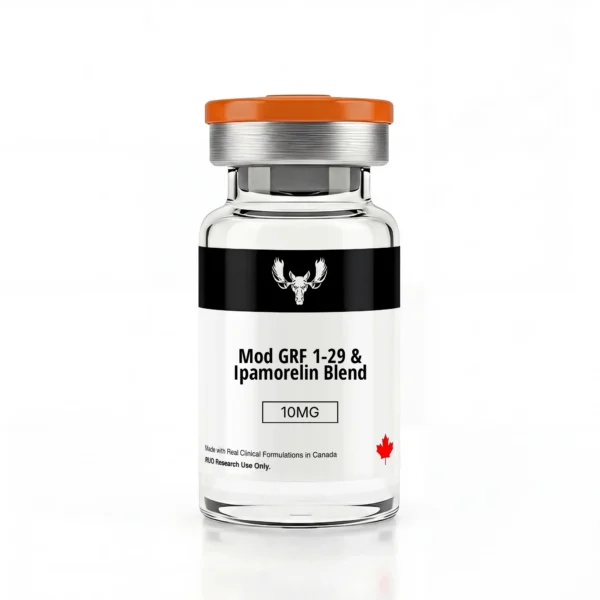
The CJC-1295 + Ipamorelin combination — available pre-blended as our Mod GRF 1-29 & Ipamorelin Blend (10mg) — is the most widely used peptide stack for muscle growth research and the one with the strongest evidence base behind it. It pairs a GHRH analog (Mod GRF 1-29, also called CJC-1295 without DAC) with a selective GHRP (Ipamorelin), activating two completely separate receptor systems simultaneously to produce a synergistic GH pulse significantly larger than either compound alone.
How It Works for Muscle Growth
Mod GRF 1-29 binds to GHRH receptors on pituitary somatotrophs, signalling them to synthesise and prepare GH for release. Ipamorelin binds to ghrelin receptors (GHS-R1a) on the same cells, triggering the actual release of that GH in a clean, short pulse. Research confirms this dual-receptor synergy is pharmacodynamically real — co-administration produces GH responses exceeding the sum of individual doses. The Teichman et al. (2006) human trial found a GHRH analog raised GH by 2–10 fold and IGF-1 by 1.5–3 fold. That IGF-1 elevation is the primary driver of downstream muscle effects: increased protein synthesis, satellite cell activation, improved nitrogen retention, and enhanced fat metabolism.
Ipamorelin’s key advantage over older GHRPs is selectivity — it doesn’t raise cortisol, prolactin, or ACTH. This means the anabolic signal from GH and IGF-1 isn’t counteracted by a cortisol spike that would otherwise promote muscle breakdown. For muscle growth specifically, this makes it the cleanest GHRP available.
Key Benefits
- Synergistic GH pulse 3–5x larger than either compound alone, driving robust IGF-1 elevation
- Increased lean mass — a 4-month Mod GRF protocol found average gains of 1.26 kg lean body mass
- Enhanced fat metabolism, particularly visceral fat, improving overall body composition
- Improved slow-wave sleep depth when dosed before bed, amplifying the natural nocturnal GH peak
- Minimal hormonal side effects — no cortisol, prolactin, or ACTH elevation from Ipamorelin
02 — Best Recovery Stack
BPC-157 & TB-500 — The Wolverine Stack
Mechanism: Angiogenesis + cell migration · Goal: Injury recovery, connective tissue, training capacity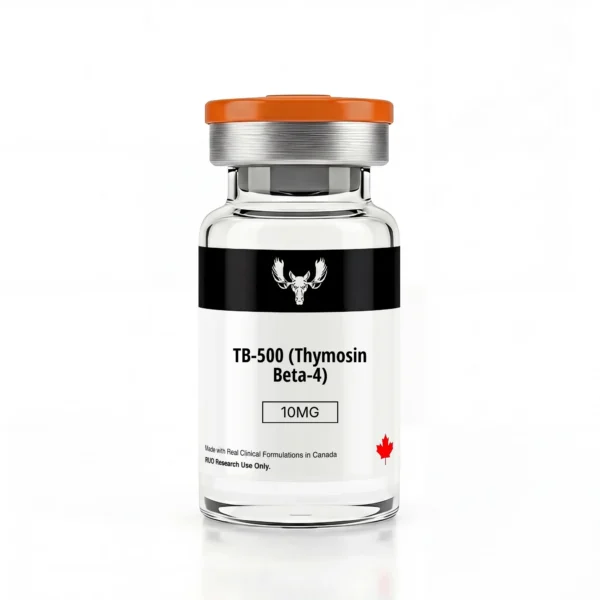
BPC-157 and TB-500 are the two most studied tissue repair peptides available, and their combination — often called the “Wolverine Stack” — is the most commonly used recovery-focused protocol in peptide research. They work through completely different mechanisms, which is precisely why they stack so effectively: BPC-157 drives local angiogenesis and growth factor upregulation at injury sites, while TB-500 promotes systemic cell migration and inflammation reduction throughout the body.
For muscle growth specifically, these peptides work indirectly — by dramatically shortening recovery time between training sessions, they allow athletes to train with higher frequency and volume, which is the primary driver of long-term hypertrophy. A muscle that can recover in 48 hours instead of 72 allows for significantly more training stimulus over a 12-week cycle.
How BPC-157 Works
BPC-157 (Body Protection Compound-157) is a 15-amino-acid peptide derived from a protein found in human gastric juice. It activates VEGFR2 receptors, promoting new blood vessel formation at injury sites — delivering more oxygen, nutrients, and repair factors directly to damaged tissue. It also upregulates growth factor expression (VEGF, EGF) and modulates inflammatory cytokines, accelerating the transition from inflammatory phase to proliferative repair. Multiple rat studies have demonstrated significantly faster Achilles tendon healing and muscle reattachment with BPC-157 compared to controls. Its unusual gastric acid stability also means oral administration has shown effectiveness in animal models for gut-related damage.
How TB-500 Works
TB-500 is a synthetic fragment of Thymosin Beta-4, a protein that regulates actin polymerisation throughout the body. By sequestering actin monomers, TB-500 controls how quickly new cells can migrate into damaged tissue and anchor themselves — the rate-limiting step in wound healing and muscle repair. It reduces inflammatory cytokines systemically (not just at a local site), which allows the healing response to proceed without prolonged inflammation that damages surrounding healthy tissue. A study by Goldstein et al. demonstrated that Thymosin Beta-4 improved cardiac function and reduced scarring after myocardial infarction in rats, illustrating its systemic repair profile across different tissue types.
Key Benefits of the Stack
- Dramatically faster recovery from muscle micro-tears, strains, and overuse injuries
- Improved tendon and ligament strength — reduces injury risk during heavy compound lifts
- Reduced post-workout inflammation and soreness for more consistent progressive overload
- BPC-157’s complementary local action + TB-500’s systemic reach covers the full repair process
- Higher sustainable training volume and frequency = greater long-term hypertrophy
Shop each compound individually: BPC-157 and TB-500.
Shop TB-500 →03 — Cleanest GH Secretagogue
Ipamorelin
Mechanism: Selective GHS-R1a (ghrelin receptor) agonist · Goal: Clean GH release, lean mass, sleep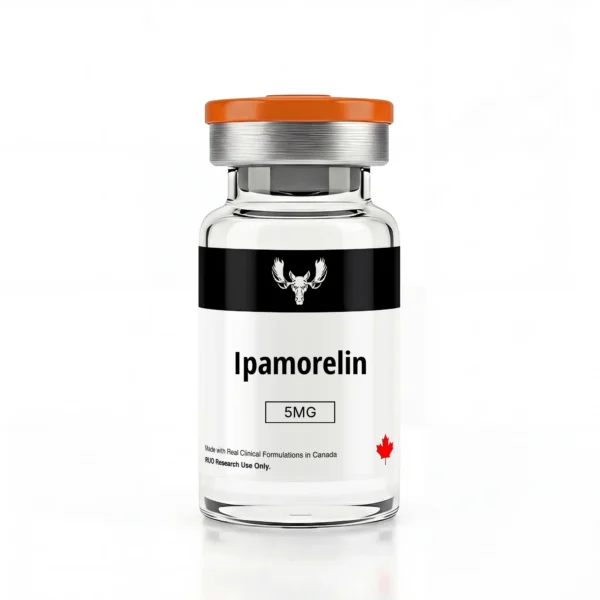
Ipamorelin is the benchmark GHRP — the first and still the most selective growth hormone-releasing peptide available. Developed by Novo Nordisk in the late 1990s and published in the European Journal of Endocrinology (Raun et al., 1998) as “the first selective growth hormone secretagogue,” it triggers GH release from the pituitary without meaningfully affecting cortisol, prolactin, or ACTH. That selectivity profile is what separates it from every GHRP that came before it.
How It Works for Muscle Growth
Ipamorelin binds to GHS-R1a receptors on pituitary somatotrophs, activating a Gq/11 protein cascade that releases calcium from intracellular stores, triggering a GH pulse. This pulse peaks around 40 minutes post-injection and clears within 2 hours, producing a clean anabolic window without disrupting the body’s natural GH pulsatility. The downstream IGF-1 elevation drives muscle protein synthesis via the PI3K/Akt/mTOR pathway, activates satellite cells for muscle repair and growth, and promotes lipolysis — particularly in visceral fat.
The Phase II human trial data (Beck et al., 2014 — 117 patients, twice-daily IV Ipamorelin for up to 7 days) found adverse event rates actually lower than placebo, confirming its safety profile. The 9-week Lall et al. study showed lean mass increases in both GH-deficient and normal subjects, with no organ enlargement unlike direct HGH treatment.
Key Benefits
- Clean, selective GH pulse — no cortisol, prolactin, or ACTH elevation
- IGF-1 driven protein synthesis and satellite cell activation for sustained lean mass gains
- Improved slow-wave sleep quality when dosed before bed — amplifies the nocturnal GH peak
- Supports fat loss while preserving lean mass — ideal for recomposition protocols
- Phase II human trial safety data — one of the better-characterised GHRPs from a clinical standpoint
04 — Best Single Repair Peptide
BPC-157
Mechanism: VEGFR2 activation, angiogenesis, growth factor upregulation · Goal: Muscle repair, tendons, joints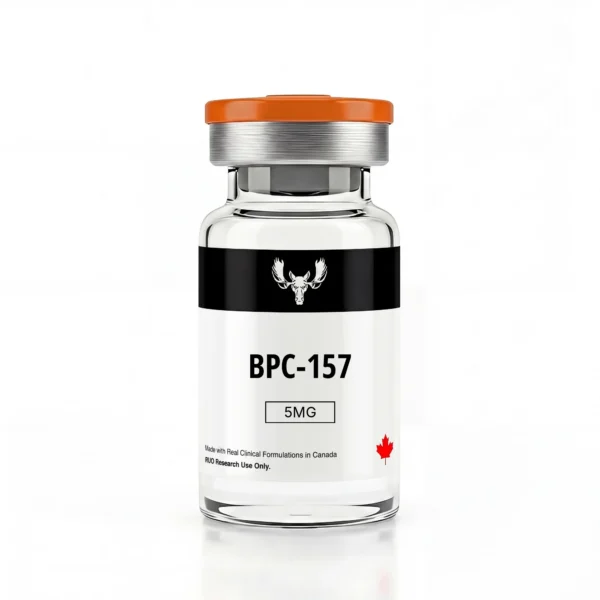
BPC-157 has over 30 years of consistent preclinical research behind it — more than almost any other research peptide. It doesn’t stimulate GH directly, but its ability to accelerate tissue repair makes it indirectly one of the most valuable compounds for muscle growth: a body that heals faster can train harder, more frequently, and with greater intensity — all of which are the actual drivers of hypertrophy over a training cycle.
How It Works for Muscle Growth
BPC-157 activates VEGFR2 (vascular endothelial growth factor receptor 2), stimulating new blood vessel formation at injury sites — a process called angiogenesis. More blood vessels at a damaged site means more oxygen delivery, faster waste removal, and faster delivery of repair factors. It also activates the FAK-paxillin pathway, which controls cell migration into wound tissue, and upregulates growth factors including EGF and VEGF that drive cellular proliferation. Multiple rat studies show significantly faster Achilles tendon healing with BPC-157, and a small human retrospective study of 12 chronic knee pain patients found 7 of 12 reported sustained pain relief lasting more than 6 months after a single injection.
BPC-157 also counteracts glucocorticoid-induced GH suppression — relevant for any researcher or athlete using corticosteroids for injury management, since steroids otherwise blunt the GH signal that drives muscle repair.
Key Benefits
- Accelerated muscle fibre repair — multiple animal studies confirm faster healing of torn and strained tissue
- Tendon and ligament strengthening — reduces the injury risk that limits heavy compound training
- Reduced post-training inflammation — shortens soreness duration for quicker session-to-session recovery
- Unusual gastric acid stability — both injectable and oral routes have shown effectiveness in animal models
- Complements GH secretagogues well — adding BPC-157 to an Ipamorelin or CJC stack covers both anabolic signalling and tissue repair simultaneously
05 — Most Direct Anabolic Peptide
Receptor Grade IGF-1 LR3
Mechanism: Direct IGF-1 receptor activation · Goal: Hyperplasia, hypertrophy, protein synthesis, nutrient partitioning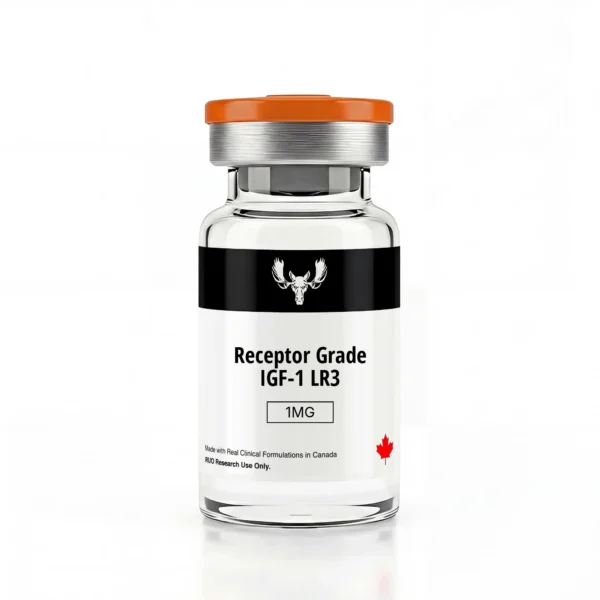
IGF-1 LR3 is structurally distinct from every other peptide on this list. While GH secretagogues work by stimulating the pituitary to raise IGF-1 indirectly, IGF-1 LR3 bypasses the GH axis entirely and activates IGF-1 receptors on muscle tissue directly. This makes it the most immediately anabolic peptide available — and the one with the most direct evidence for both muscle hypertrophy and hyperplasia.
The “LR3” designation refers to a structural modification: an arginine at position 3 and an extended 13-amino-acid N-terminal extension that prevents binding to IGF-binding proteins (IGFBPs) in the bloodstream. Native IGF-1 is largely neutralised by IGFBPs before it reaches target tissue — IGF-1 LR3 bypasses this, delivering a significantly longer half-life (approximately 20–30 hours vs. 12–15 minutes for native IGF-1) and greater bioavailability at muscle tissue.
How It Works for Muscle Growth
IGF-1 LR3 binds to IGF-1 receptors on muscle fibres and activates the PI3K/Akt/mTOR pathway — the primary intracellular signalling cascade for muscle protein synthesis. This stimulates both hypertrophy (enlarging existing fibres) and hyperplasia (creating new fibres) through satellite cell activation. Research published in BMC Physiology (Adams & McCue, 1998) demonstrated that local IGF-1 infusion promoted significant muscle hypertrophy in animal models. A 2021 review in Frontiers in Physiology confirmed IGF-1’s role in driving satellite cell proliferation — the mechanism by which new muscle fibres are formed.
IGF-1 LR3 also plays a meaningful role in nutrient partitioning. By increasing amino acid uptake into muscle tissue and improving glucose utilisation in muscle cells, it directs available nutrients toward muscle synthesis rather than fat storage — particularly relevant in caloric surplus protocols where the goal is maximising lean mass while minimising fat gain.
Key Benefits
- Direct IGF-1 receptor activation at muscle tissue — no dependence on pituitary GH release
- Both hypertrophy and hyperplasia — IGF-1 LR3 is one of the few compounds with evidence for new muscle fibre formation
- 20–30 hour half-life vs. 12–15 minutes for native IGF-1 — sustained anabolic signalling from a single injection
- Enhanced nutrient partitioning — directs amino acids and glucose into muscle tissue preferentially
- Satellite cell activation — accelerates recovery and regeneration after training-induced damage
How to Stack These Peptides
These five compounds address muscle growth from different angles. Here’s how they layer together logically:
Lifestyle Factors That Determine How Well Peptides Work
Peptides amplify biological processes — they don’t replace the inputs those processes depend on. The research context makes this very clear: the lean mass gains and recovery improvements documented in studies occurred alongside structured training and adequate nutrition. Here’s what matters most:
- 1 Protein intake — 1.6–2.2g per kg of bodyweight daily. Peptides drive protein synthesis, but you need the substrate there to build with.
- 2 Progressive overload — The training stimulus is what signals the body that muscle growth is needed. Peptides amplify the response; resistance training creates the demand.
- 3 Sleep — Most natural GH release occurs during slow-wave sleep. Dosing GH secretagogues before bed aligns with this rhythm, but only works if the sleep is actually happening.
- 4 Fasted injection — For GH secretagogues, injecting in a fasted state (2–3 hours after last meal) maximises the GH pulse. Elevated insulin from recent food blunts GH release.
- 5 Dosing accuracy — Use our Peptide Dosage Calculator to get reconstitution volumes and injection units exactly right for any vial size.
Frequently Asked Questions
What peptides are best for building muscle?
For the GH axis and lean mass: the Mod GRF 1-29 + Ipamorelin stack is the most well-studied combination. For direct anabolic signalling at the muscle fibre level: IGF-1 LR3 works through a separate pathway that doesn’t depend on pituitary GH release at all. For recovery-driven muscle growth (training more frequently with less downtime): BPC-157 and TB-500 are the most effective compounds available.
Are Ipamorelin and CJC-1295 the same thing?
No — they’re complementary, not identical. CJC-1295 (Mod GRF 1-29) is a GHRH analog that activates GHRH receptors to increase GH synthesis and amplitude. Ipamorelin is a GHRP that activates ghrelin receptors to trigger GH release. They work through different receptor systems, which is why stacking them produces a synergistic GH pulse larger than either alone. They’re packaged together in our Mod GRF 1-29 & Ipamorelin Blend for exactly this reason.
Does BPC-157 directly increase muscle growth?
Not directly — BPC-157’s primary mechanism is tissue repair and angiogenesis, not anabolic signalling. But faster recovery from training-induced muscle damage allows for higher training frequency and volume, which are the actual drivers of hypertrophy. Indirectly, this makes BPC-157 one of the most practically useful muscle growth tools available. It’s also frequently combined with GH secretagogues to cover both the anabolic and recovery sides simultaneously.
What’s the difference between IGF-1 LR3 and regular IGF-1?
Native IGF-1 is almost entirely bound to IGF-binding proteins (IGFBPs) in the bloodstream, limiting its availability at target tissue and giving it a half-life of around 12–15 minutes. IGF-1 LR3’s structural modification prevents IGFBP binding, extending the half-life to approximately 20–30 hours and dramatically increasing bioavailability at muscle tissue. For research purposes, this makes it far more practical and potent than native IGF-1 per dose.
Which peptide is closest to synthetic HGH?
Functionally, the Mod GRF 1-29 + Ipamorelin stack produces the closest results to HGH — sustained IGF-1 elevation, lean mass gains, fat loss, and improved recovery — but through the body’s own pituitary rather than exogenous injection. The key difference is that somatostatin feedback remains intact, so GH levels stay physiological rather than supraphysiological, which is what gives the stack a significantly cleaner safety profile than direct HGH.
Sourcing Peptides in Canada
All five compounds listed above are available as research chemicals in Canada. Quality varies enormously between suppliers — the difference between a properly synthesised, independently tested peptide and a contaminated or mislabelled vial is both a research validity issue and a practical safety issue for injectable compounds.
Boss Peptides manufactures all products in Canada, ships same-day, and publishes third-party COAs on every product page. Every vial is verified at >99% purity by HPLC and mass spectrometry before it leaves our facility.